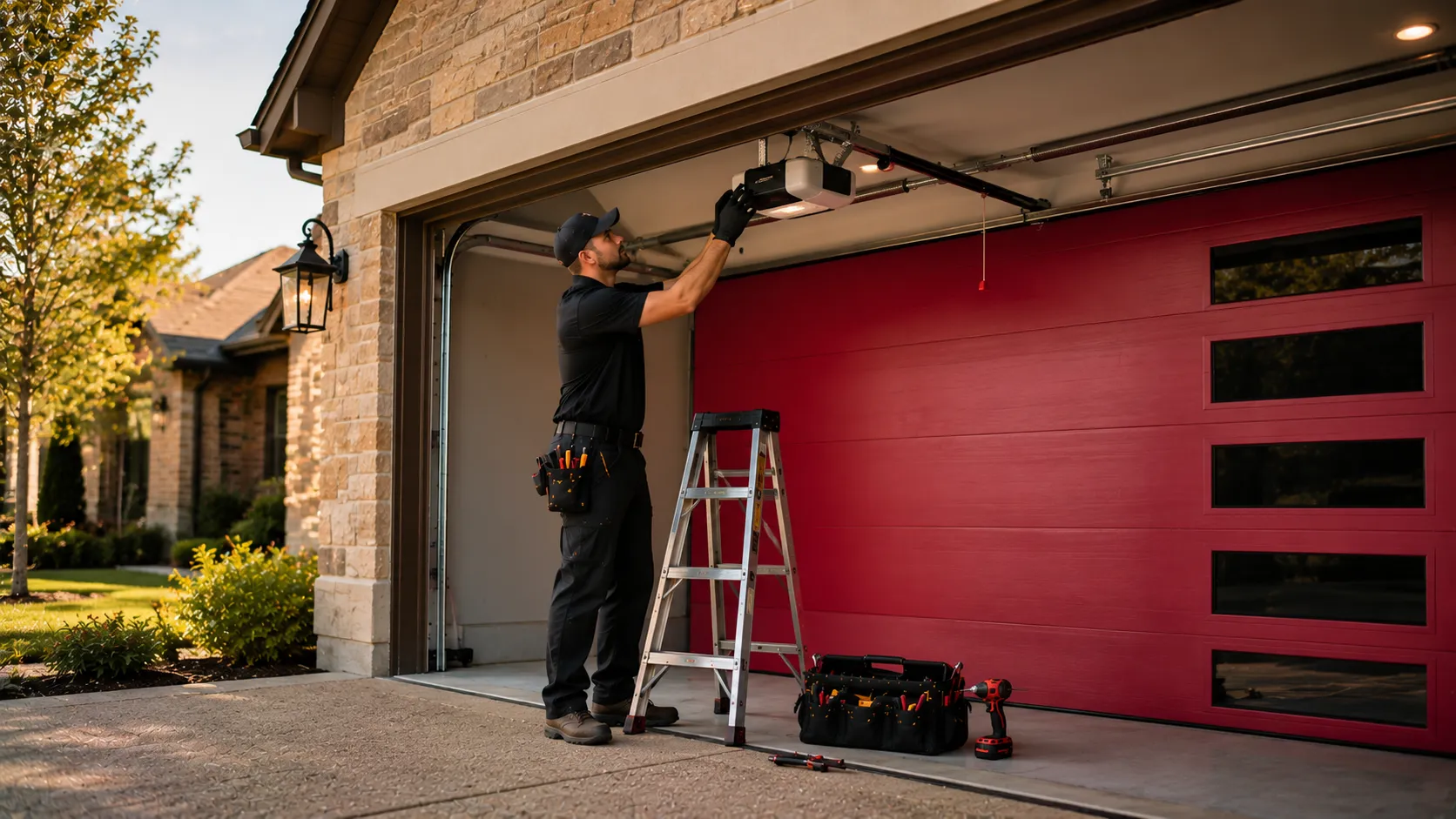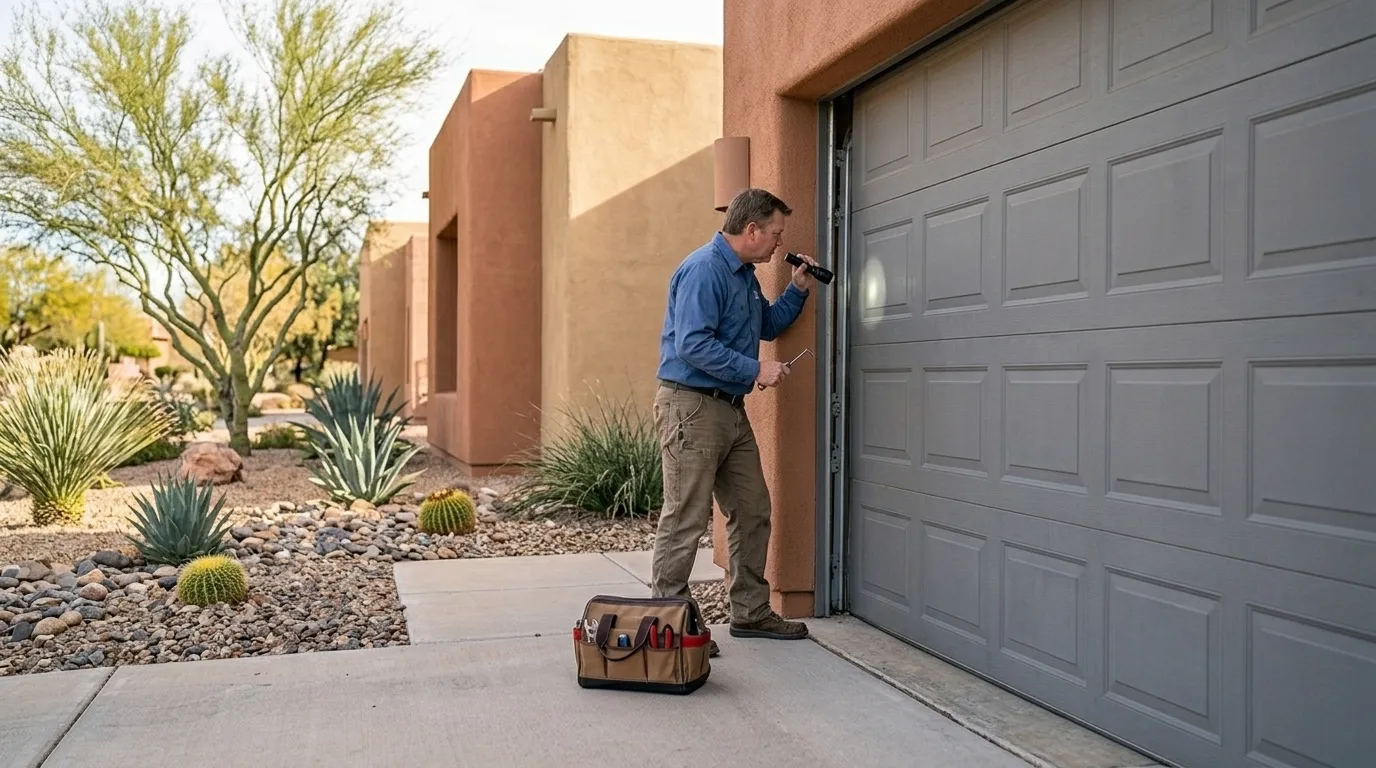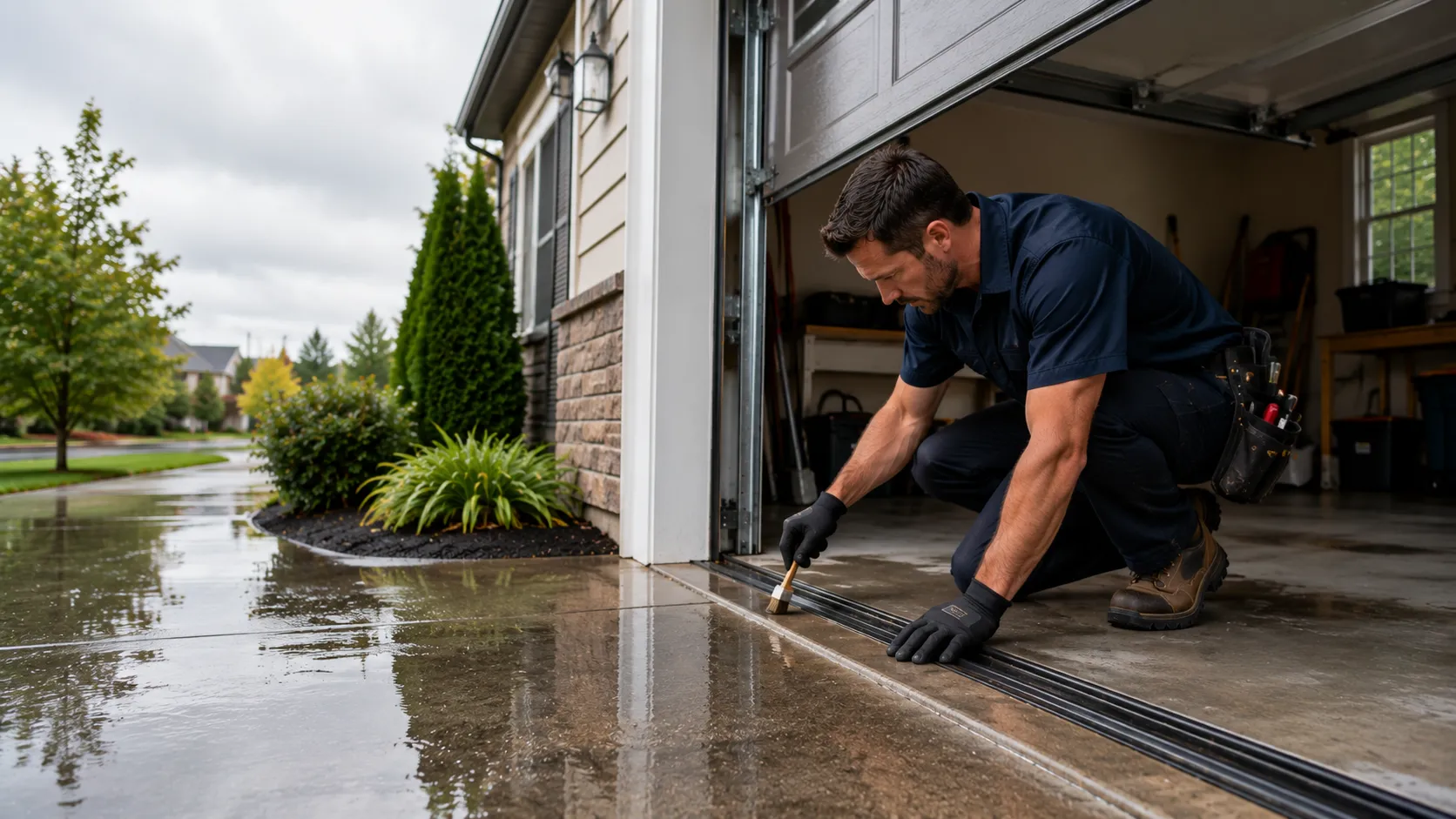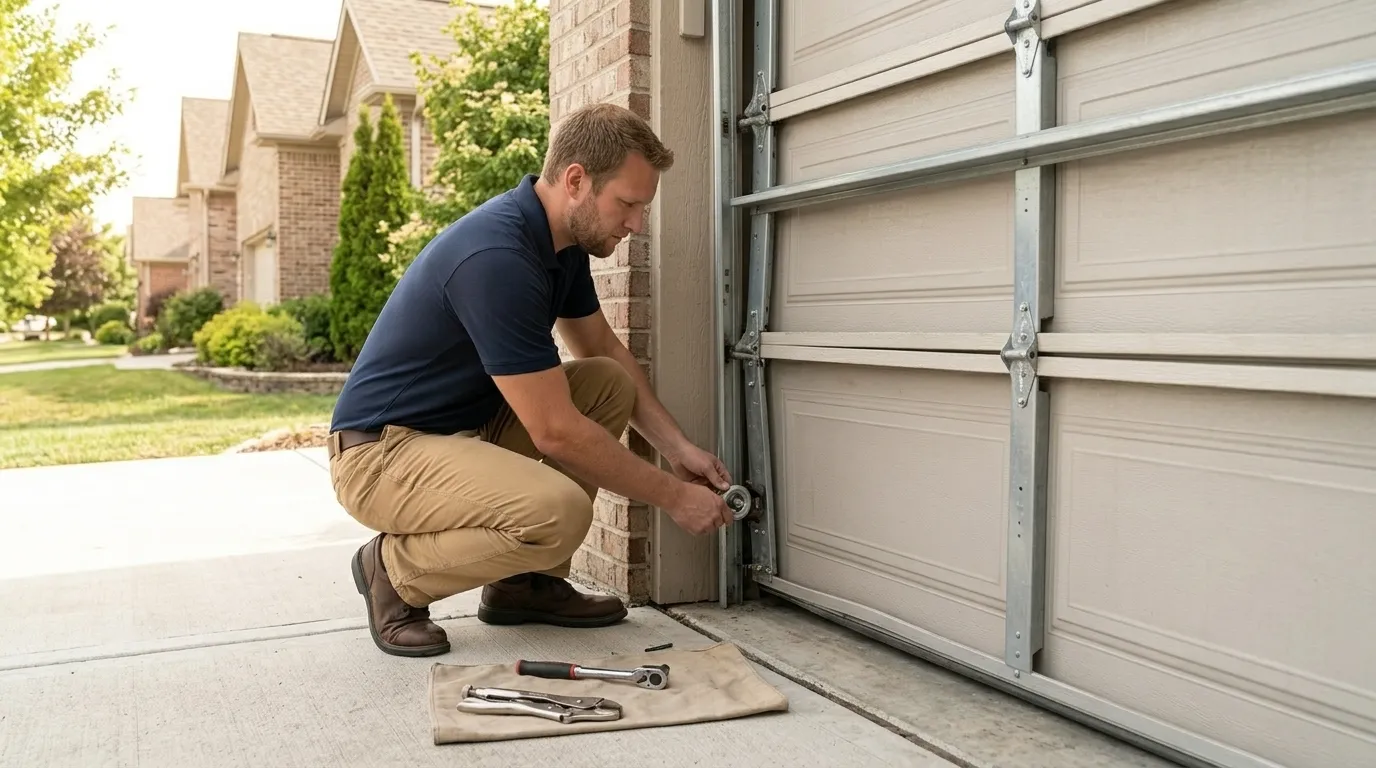
What Local Conditions Do
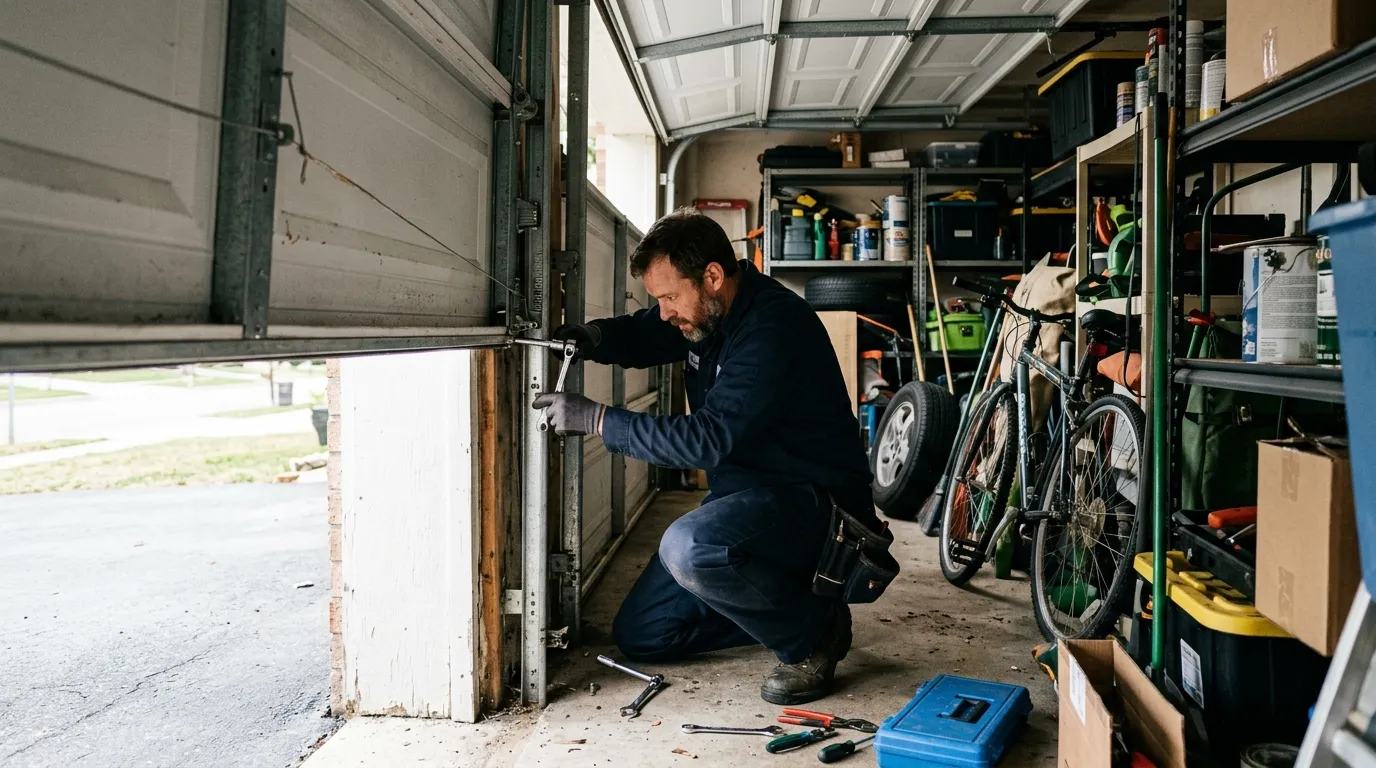
Across the 19 named growth areas that make up this service territory, most houses went up between 1971 and 2015, with the median build year sitting around 2005, so the majority of garage doors still running here came in as builder-grade steel track and rollers, not upgrades. That matters because builder-grade track is sized to the door it shipped with and bolted to jamb framing that, in a 2000s build, is still fairly young softwood. With 31,785 owner-occupied houses out of 40,679 households in this area, a lot of that original track has never been touched since the day the house was framed. Nobody re-levels a garage door track as routine maintenance, so twenty years of small settling, door slams, and the occasional bumper-tap from a car add up quietly until the rollers start riding the edge of the rail instead of the center. It's not dramatic. It's cumulative. And because so much of the stock here is roughly the same age, we see the same failure pattern show up in house after house rather than a wide mix of problems tied to different eras of construction.
What Changes With the Season
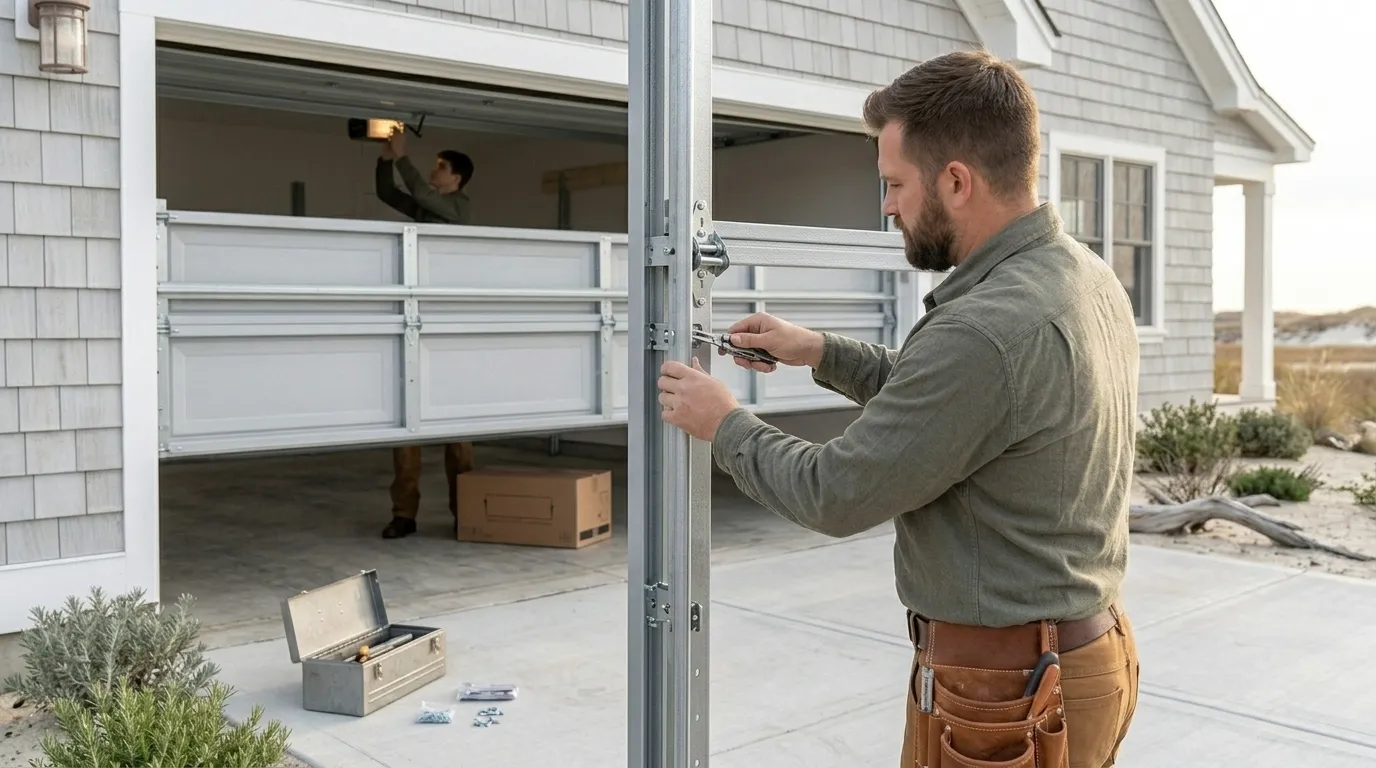
This area sits in a moderate heat band, not the kind of freeze-thaw climate where ice buildup shoves a track out of alignment overnight. So when a McKinney door jumps track, it's rarely a winter-ice problem the way it would be further north. What moderate heat does instead is slower: steel track and the door's own panels expand a little on the hottest days and contract back down at night, and over enough summers that constant small movement works at the mounting screws holding the brackets to the jamb. A screw that's been backing out fractions of a turn for a few summers doesn't announce itself until the bracket finally shifts and the track pulls out of square. You'll usually notice it as a door that runs a little rougher in August than it did in February, or a faint scrape near the top of the travel that wasn't there before. That's the track starting to walk, not a spring problem and not an opener problem, and it's worth catching before the rollers actually leave the rail.
What to Look At First
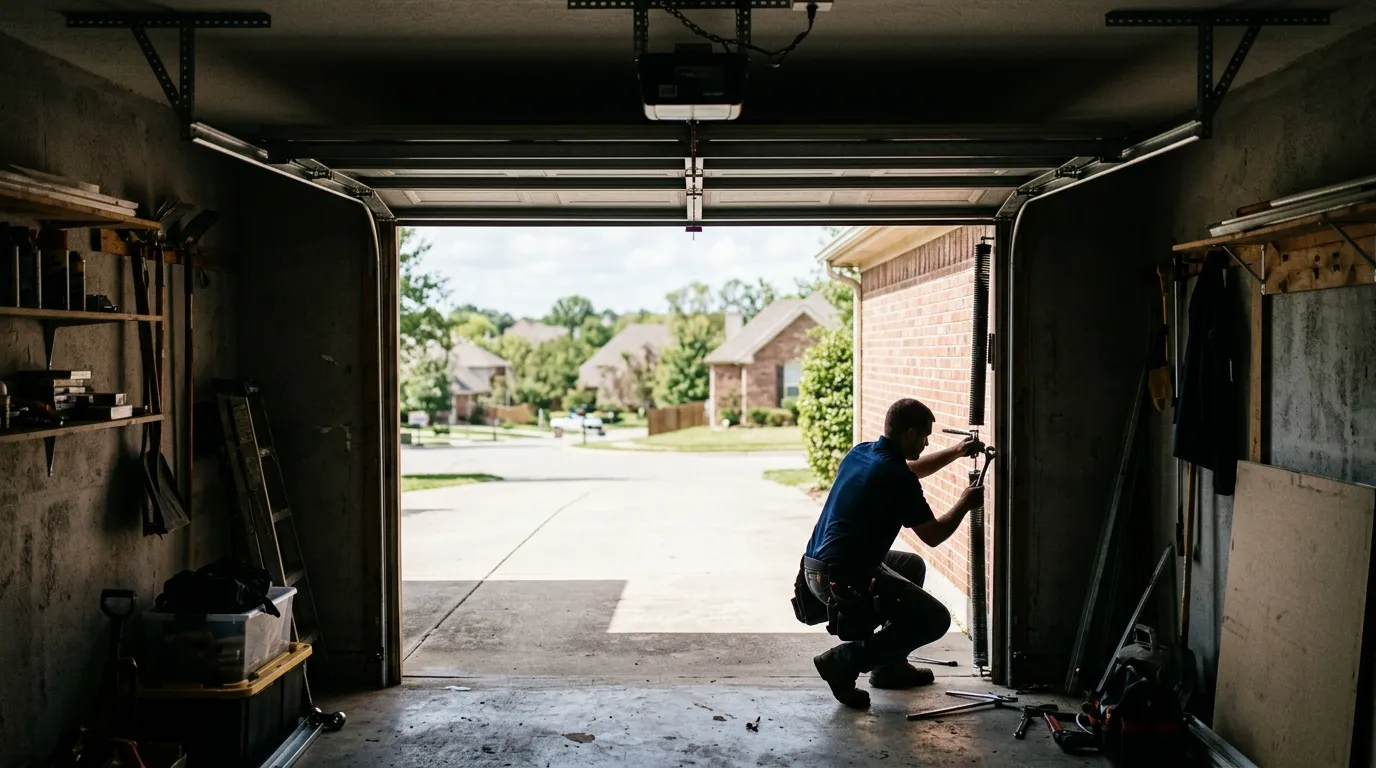
Before you call anyone, look at three things. First, the gap between the rollers and the track along the full vertical run - it should be even, not wider at the top than the bottom. Second, check every bracket where the track meets the wall or jamb for movement; grab the rail near each bracket and see if it shifts under light pressure. Third, look at the horizontal track up near the ceiling for any dip or twist, since that's the section most likely to have taken an impact from a tall vehicle or a stored ladder. If the track looks straight and the brackets are tight but the door still rides rough, the rollers themselves are probably worn rather than the track being at fault. Don't try to force a door back onto the track while it's under spring tension - that's how fingers get caught. If you're not sure which of these it is, our page at / has more on getting a look at it before anything gets worse.