24/7 Emergency Service Open 7 days · 7am–8pm Serving McKinney, TX & nearby
(469) 796-3149
McKinney, TX

What We Actually Check on a McKinney Service Call

A look at what our techs actually check on a McKinney service call, tied to the 2000s-era housing stock and moderate heat this area sees most of the year.

What We Actually Check on a McKinney Service Call

What Local Conditions Do

Most of the houses we get called to were built between 1971 and 2015, with the bulk of that stock going up around 2005 across the 19 named areas we work in. That matters more than people think. A door installed in the mid-2000s building boom is now 15 to 20 years old, which is right around when torsion springs, nylon rollers, and factory openers start failing together instead of one at a time. We're not dealing with 1960s hardware that nobody stocks - we're dealing with a wave of doors that all hit the same wear point at roughly the same time. On a service call, that's the first thing we're thinking about before we even open the panel: what generation of parts are we probably looking at, given when this subdivision was built. It's also why we don't assume a fix that worked on an older door in an older neighborhood applies here. The materials, the spring cycle ratings, and the opener electronics from the 2000s builder-grade packages behave differently than what came before or after.

What Changes With the Season

McKinney sits in a moderate heat climate band, not the extreme swings some parts of the country deal with. That's good news for the door itself - you don't get the violent expansion-and-contraction cycling that cracks panels or warps tracks in places with harsh winters. But moderate heat still does its work over a long season. Lubricant on rollers and hinges dries out faster than owners expect, torsion springs lose a little tension as metal heats and cools through the day, and weatherstripping along the bottom seal hardens and starts letting in dust and light. On a call here, we're checking lubrication and seal condition more than we're checking for storm damage or ice-related track separation, because that's what this climate actually does to a door over months, not what a worse-weather town would produce.

The Problem

The recurring issue we see tracks straight back to the housing timeline: a door and opener from the 2000s builder package are now old enough that the spring is near or past its rated cycle count, but the opener still runs, so the owner hasn't thought about replacing anything. The door starts making noise, or the opener strains and reverses, and the owner assumes it's the opener's fault. Most of the time it's the spring quietly losing tension for months before it finally lets go, and the opener has just been compensating. We can't tell you which is happening on your door without opening it up and measuring - that part isn't something we fake over the phone. What we can tell you is that a door this age, from a house built in that era, is a strong candidate for spring fatigue before it's a candidate for a bad opener board.

What to Look At First

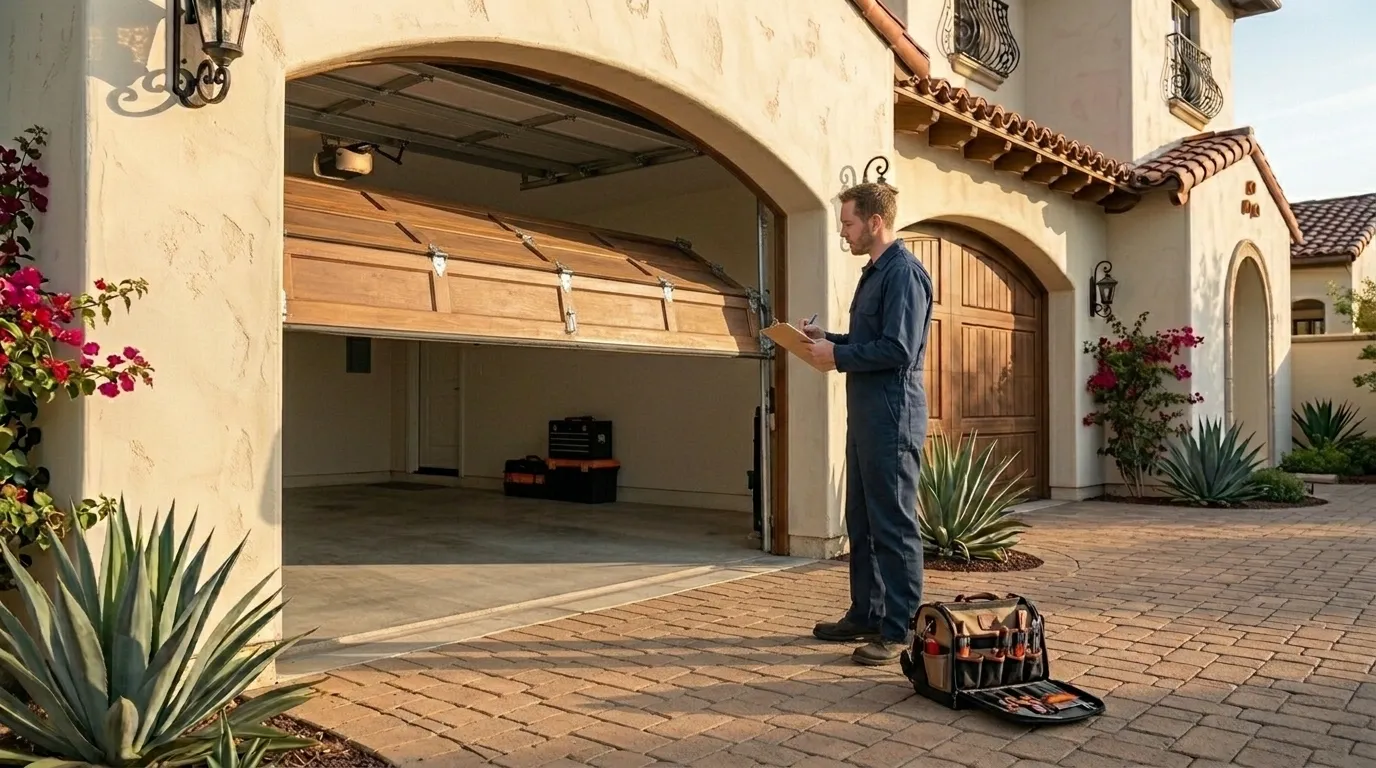
Before you call, look at three things. First, the springs above the door - if the coils look stretched unevenly or you see a gap when the door is down, that's tension loss, not an opener problem. Second, the bottom seal - cracked or flattened rubber lets in more than dust in our climate, it's usually the first sign the door's been sitting unused in full sun for a stretch. Third, listen for grinding versus straining: grinding is usually rollers, straining under load is usually the spring. One honest limit here - we can't diagnose a dead opener logic board or a wiring fault without hands on it, and guessing over the phone wastes your time and ours. If your door is from that original builder-grade batch and it's showing more than one of these signs at once, it's worth having someone look at the whole system, not just the noisy part.
How it works

From “it’s stuck” to “it’s fixed”

A quick, honest process - no guesswork and no surprises.

  1. Tell us what’s wrong - McKinney garage door service
    1

    Tell us what’s wrong

    Describe the symptom - won’t open, loud bang, opener runs but the door won’t move.

  2. On-site diagnosis - McKinney garage door service
    2

    On-site diagnosis

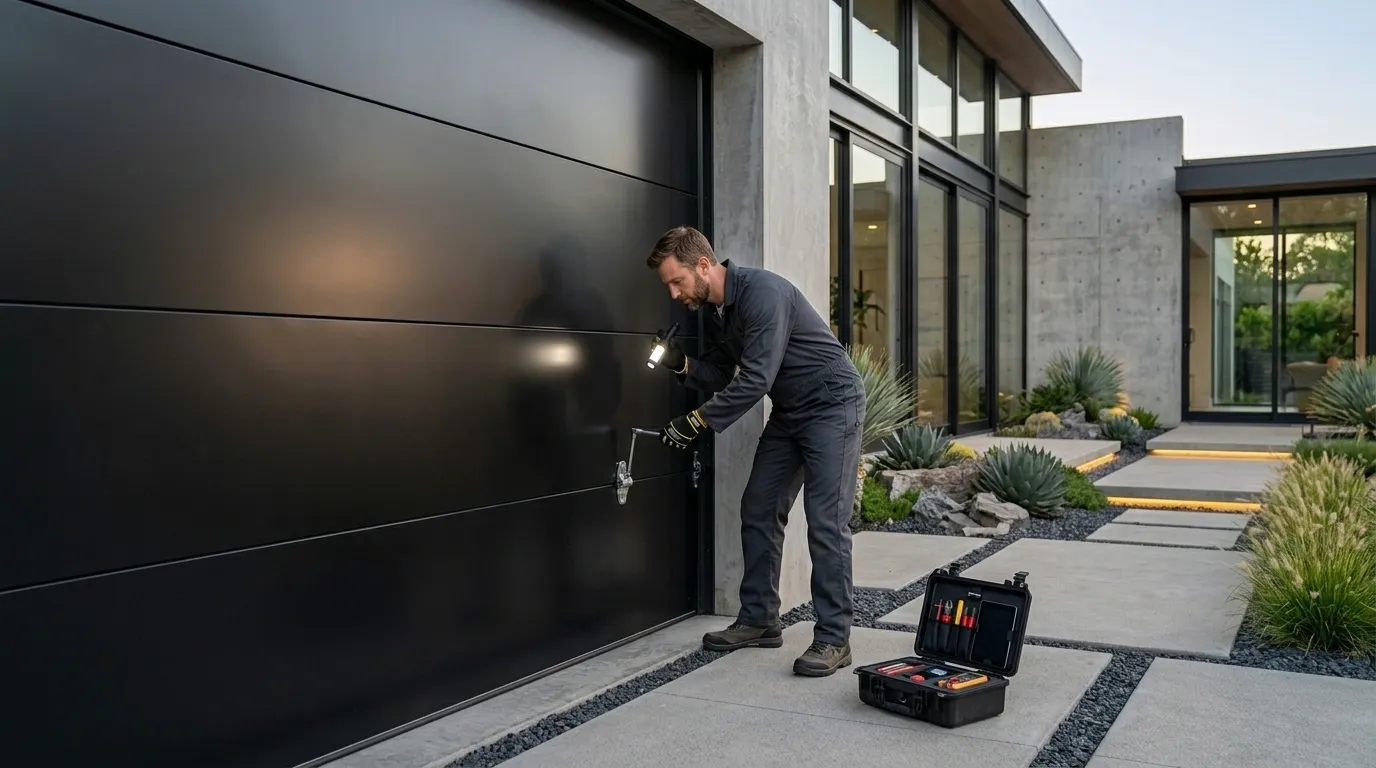
    A technician tests the door under power and by hand and finds what actually failed.

  3. Clear, up-front plan - McKinney garage door service
    3

    Clear, up-front plan

    You get the fix that’s needed and what drives the cost - before any work starts.

  4. Repaired & tested - McKinney garage door service
    4

    Repaired & tested

    The repair is done, the door is set true and tested, and the work area left clean.

Serving McKinney, TX - tell us what your door’s doing and we’ll take it from there.

How we work

What to expect

Diagnosis first

Every visit starts by finding what actually failed - not a pre-written parts list.

The right part for the doorSprings and openers matched to the door’s weight and age, so the fix holds up.
Straight answersWhen a repair makes more sense than a replacement - or the reverse - you hear it plainly.
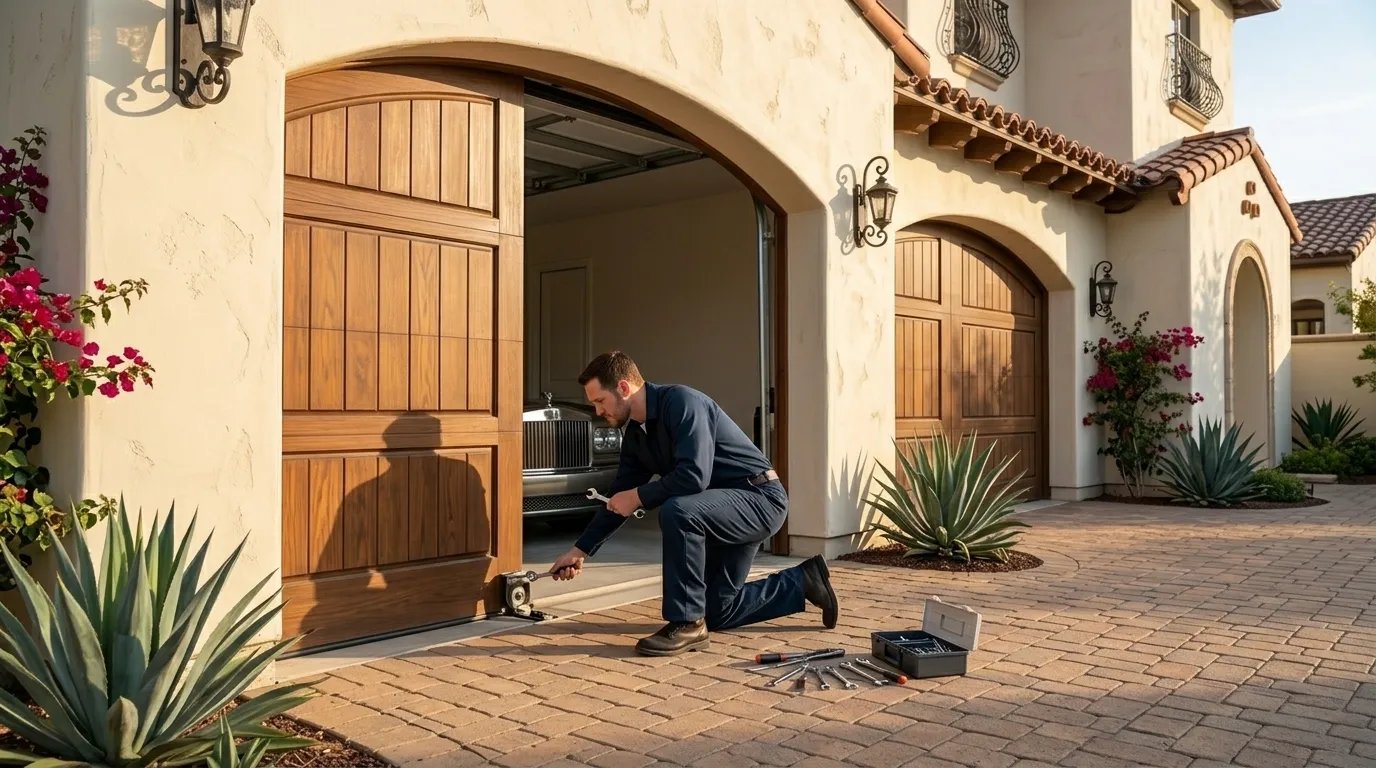
Clean, careful workTension released safely, hardware set true, the door tested under power before we leave.
Questions

Frequently asked

Straight answers about garage door repair in McKinney. Still unsure? Ask us directly.

Is my garage door old enough to worry about the spring specifically?

If your house went up during the area's main building years, roughly the early 2000s, your original spring is likely near or past its rated cycle life. That's the single most common failure point on doors from that era, more than the opener or the track.

Does McKinney's climate mean I need special maintenance?

Not extreme measures, but moderate heat still dries lubricant and hardens weatherstripping over time. Regular lubrication and checking the bottom seal matter more here than winterizing against ice or heavy snow, which this area doesn't see.

Can you tell me what's wrong over the phone?

Not reliably. We can talk through symptoms, but spring tension, opener board faults, and roller wear all need a hands-on look. Guessing before we see the door risks sending the wrong tech or the wrong part.

My opener is straining but the door still opens - is that urgent?

Treat it as urgent. A straining opener on an aging door is usually the opener compensating for a weakening spring, not an opener problem itself. Left alone, the spring can fail suddenly under load, which is more dangerous and costlier to fix.

Ready to get your garage door sorted?

Tell us what it’s doing and where you are in McKinney - we’ll take it from there.

Request a QuoteCall