What Local Conditions Do
McKinney's housing stock mostly dates 1971-2015, with a median build year of 2005, so a large share of the original torsion springs in this area are now about two decades old. Across the 19 named areas in the service territory, most of that construction happened during the 2000s building boom, which means a lot of garages here got the same spring, the same door, and the same hardware within a few years of each other. That's not a coincidence you'd see everywhere - it's what happens when a town grows fast in a short window. A torsion spring is rated for a set number of open-close cycles, and once a house crosses roughly 20 years old, a lot of springs installed with the original build are sitting right at the edge of that rating. The service area sits in a HEAT moderate climate band, not a harsh-winter zone, so cold-weather spring failures here are the exception rather than the rule - but exception doesn't mean never, and an aging spring doesn't care what the average January looks like.
What Changes With the Season
In a HEAT moderate climate like this one, the bigger stress on a spring is summer heat cycling that dries out lubricant, not winter cold - so when a spring does go in cold weather here, it's usually because it was already worn thin by the heat months before. Steel doesn't like sudden temperature swings. On a cold morning the coil is stiffer and less forgiving, and a spring that's been quietly losing tension all summer through repeated heat expansion and contraction is the one that finally lets go once the temperature drops. That's a different pattern than what you'd see in a place with long, brutal winters, where cold itself does most of the damage. Here, cold weather tends to be the trigger, not the cause. It exposes a spring that was already near the end of its life rather than creating the wear in the first place. That distinction matters if you're trying to figure out whether a spring failure was bad luck or something that had been building for months.
What to Look At First
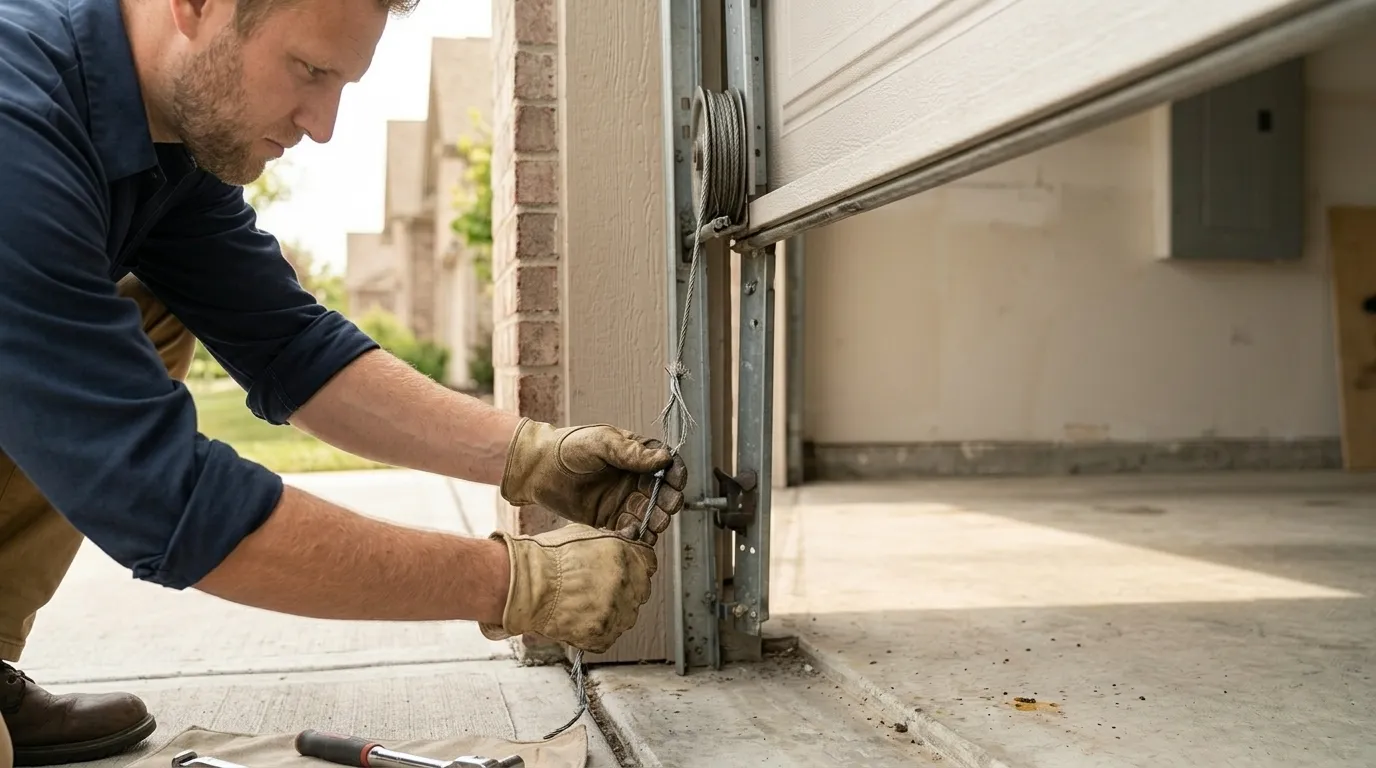
If your house was built anywhere between 1971 and 2015 - which covers most of this area - check the spring's coil for rust and gaps before winter, since a spring already near the end of its cycle life is the one most likely to snap on the season's first cold snap. Look for a visible gap in the coil when the door is down, flaking rust along the winding, or a door that feels heavier than it used to when you lift it manually with the opener disconnected. None of those signs guarantee failure is imminent, but any one of them is reason enough to have the spring looked at rather than waiting for it to break on a cold morning with the door stuck halfway. Original hardware from a 2000s-era build has had roughly 20 years of cycles, and that's the number that matters more than the calendar. A spring that looks fine in August can still be the one that goes first once the weather turns.