What Local Conditions Do
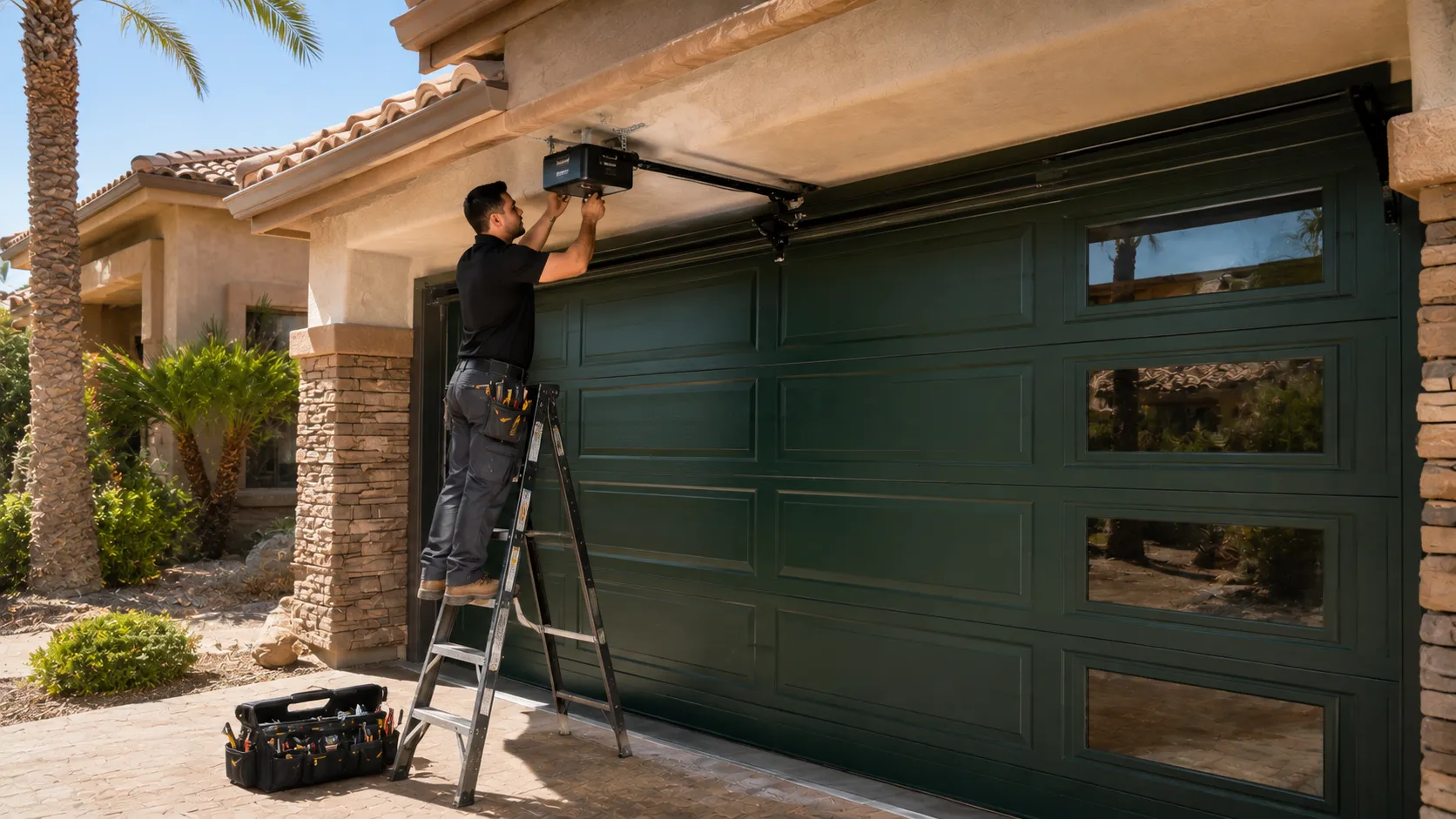
McKinney's housing stock runs 1971 through 2015, with the median build year landing around 2005. That matters for noise because it tells you what hardware is behind the wall. A door from a 2005-era build is almost always on a torsion spring system with a chain or belt-drive opener from that decade, not the older extension-spring setups you'd find in a much older neighborhood. Those openers use nylon gears and steel chain that wear on a predictable schedule, and torsion springs from that build window are now old enough that fatigue cracking is common.
Across the 19 named areas that make up this service territory, the mix skews heavily toward 2000s-era stock, so the noises we hear on a service call in one subdivision tend to repeat in the next. That's not a coincidence - it's the same garage door assembly line output, installed in the same five-to-ten year window, aging out at roughly the same time. A rhythmic thump every few seconds usually points to a flat spot on a roller from that generation of hardware. A sharp bang followed by the door refusing to move points to a spring that's finally given out after fifteen-plus years of cycles.
What Changes With the Season
McKinney sits in a moderate heat climate band, not an extreme one, so the noise patterns here are driven more by age and cycle count than by dramatic temperature swings. Steel expands and contracts enough through a Texas summer to tighten up a track that was already slightly out of alignment, which turns a quiet rattle into a louder scrape once the heat sets in. Grease that was fine in cooler months can thin out and run off chain and hinges during the hottest stretch, leaving metal-on-metal contact that sounds like a dry hinge on a screen door, just louder.
It's a moderate band, though, not a punishing one - we're not dealing with the kind of freeze-thaw cycling that snaps hardware overnight, or the humidity swings that warp wood doors in a wetter climate. What we see instead is steady wear that shows up as noise before it shows up as failure. A door that's been quiet all spring and suddenly starts groaning in July isn't reacting to one bad day of heat. It's telling you the lubrication and alignment issues that were already there just got exposed.
What to Look At First
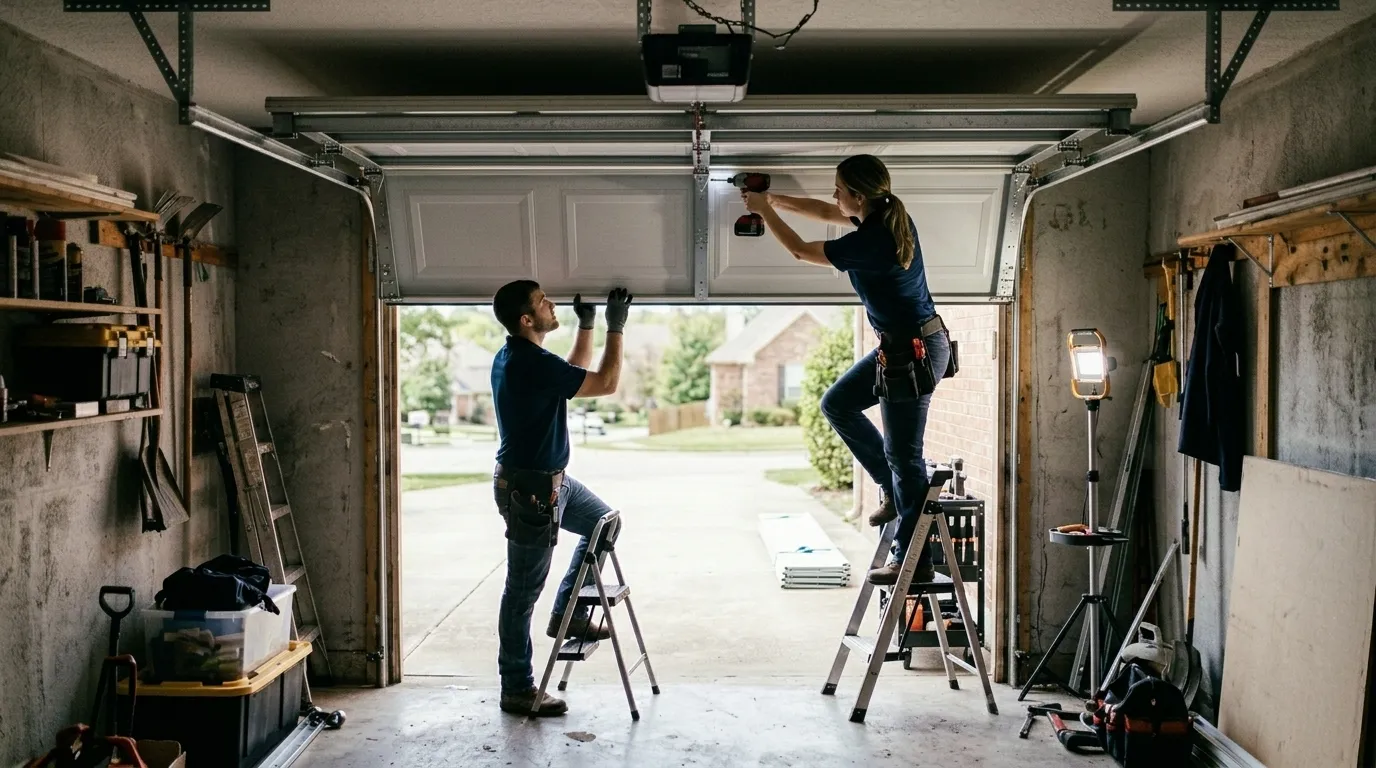
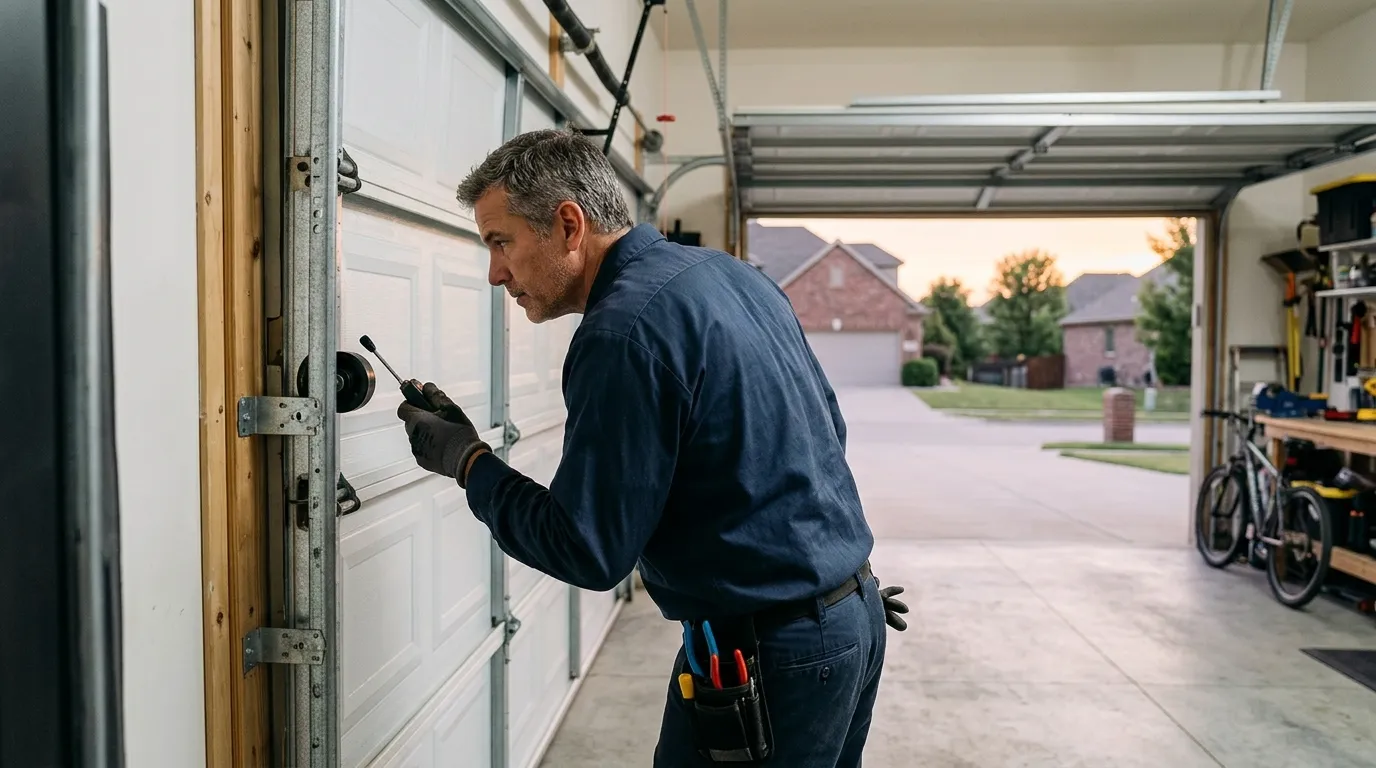
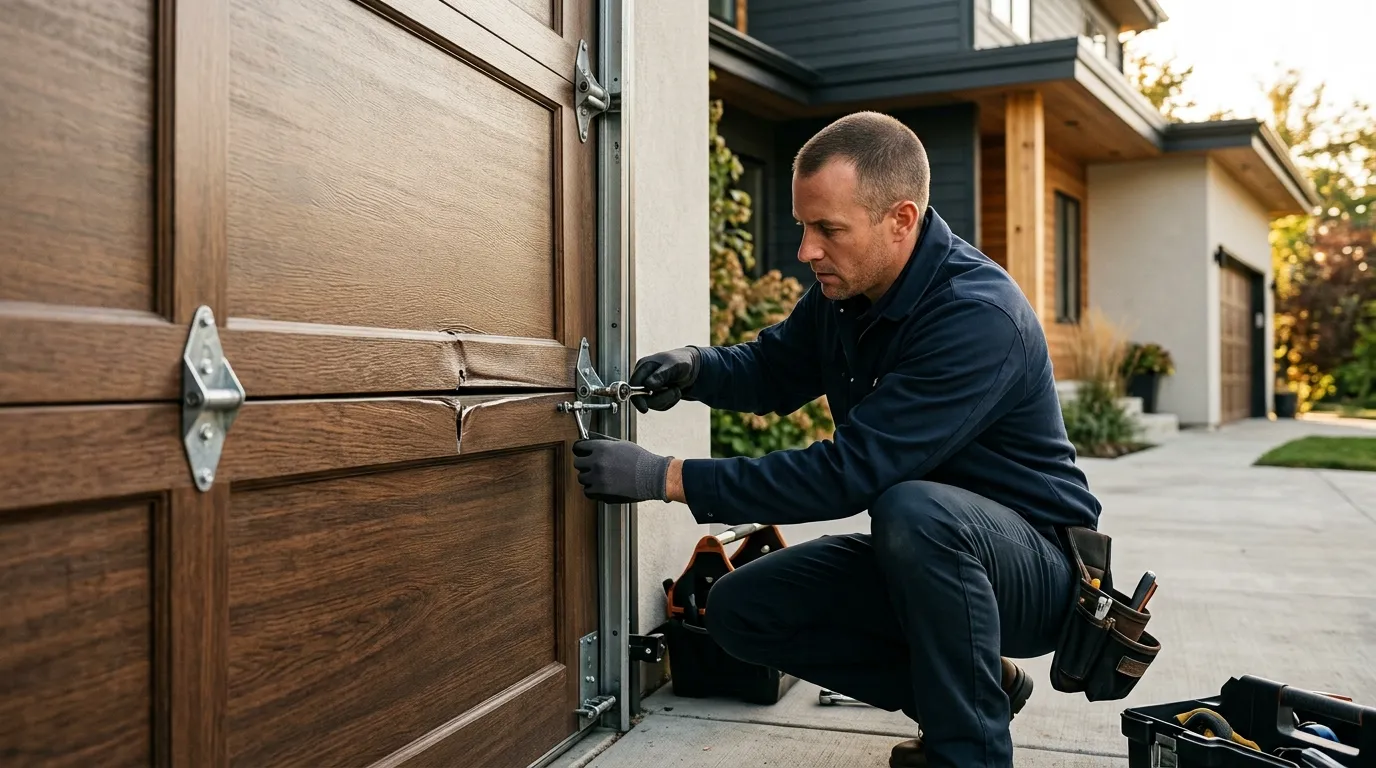
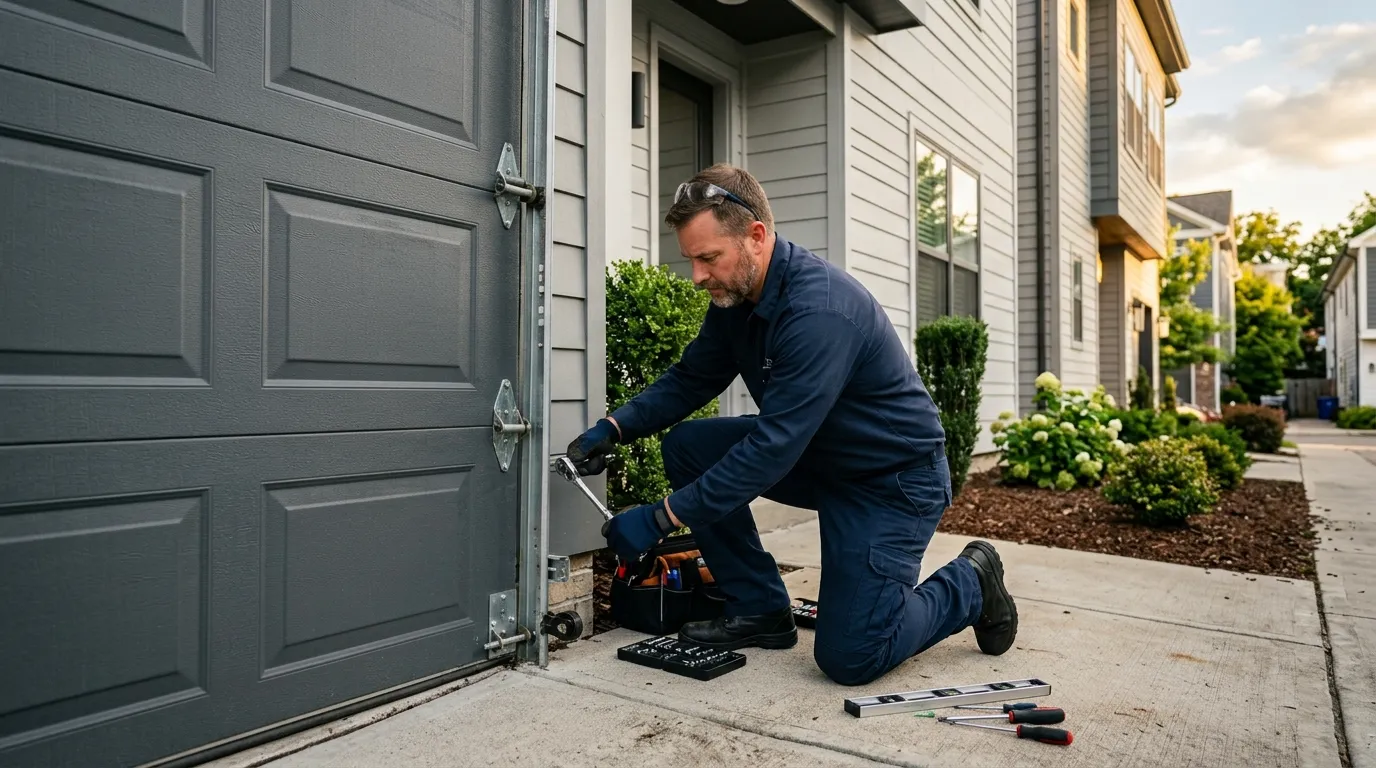
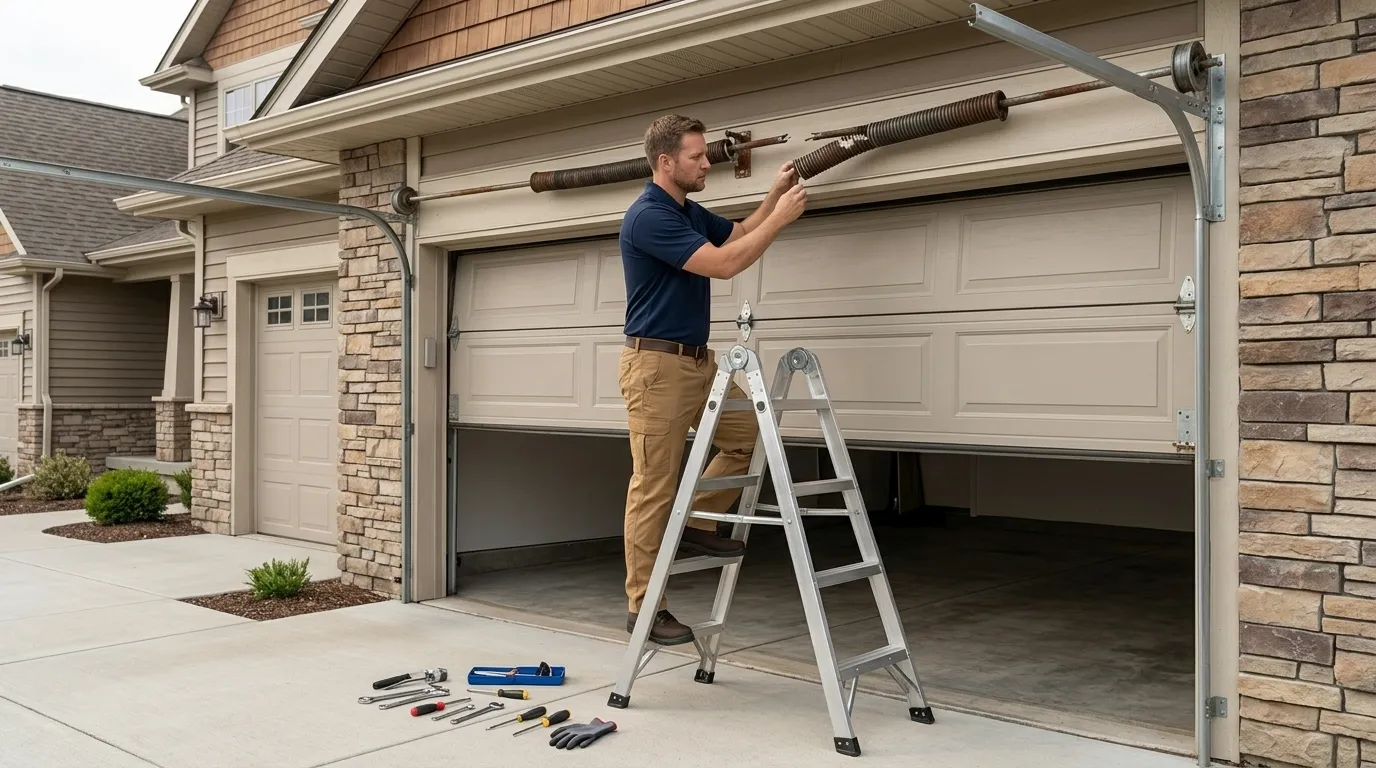
Start with the springs, since that's where the loudest and most dangerous noises come from. A torsion spring installed when the house was built in the 2000s is well past the point where a sudden bang or a visible gap in the coil should be ignored - don't try to open the door manually if you see a gap. Next, check the rollers where the door meets the track; a repetitive thump on every rotation is a flat-sided roller, not a track problem, and it's a cheap fix if you catch it before it chews up the track itself.
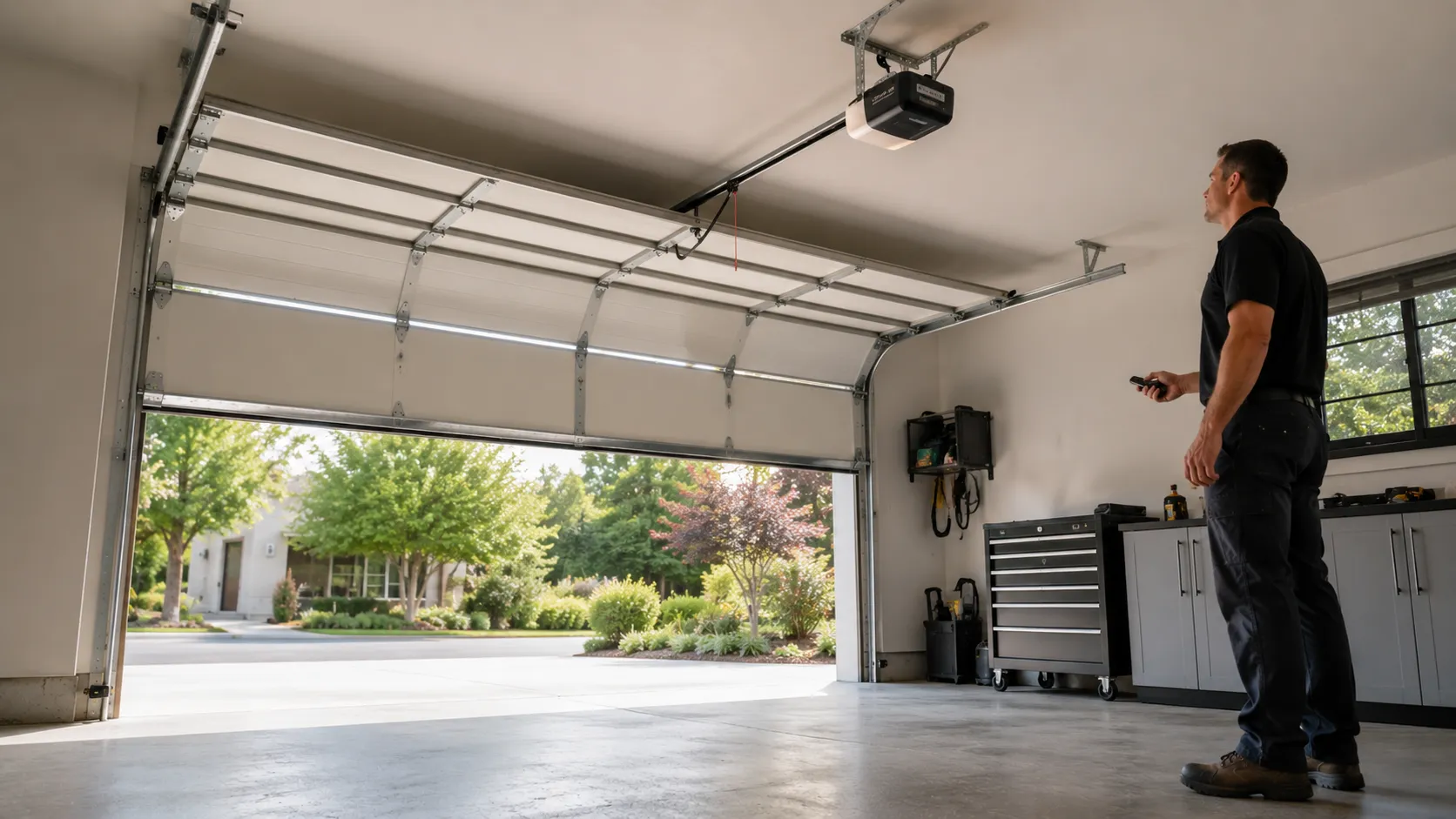
If the sound is more of a grinding whine that happens only when the opener runs, that's usually the gear inside the opener housing, common on units original to the 40,679 households built in this same construction era. Listen for where the sound starts - at the header near the opener, along the tracks, or down at the springs above the door - because that location tells you which part is failing well before you call anyone out.