What Local Conditions Do
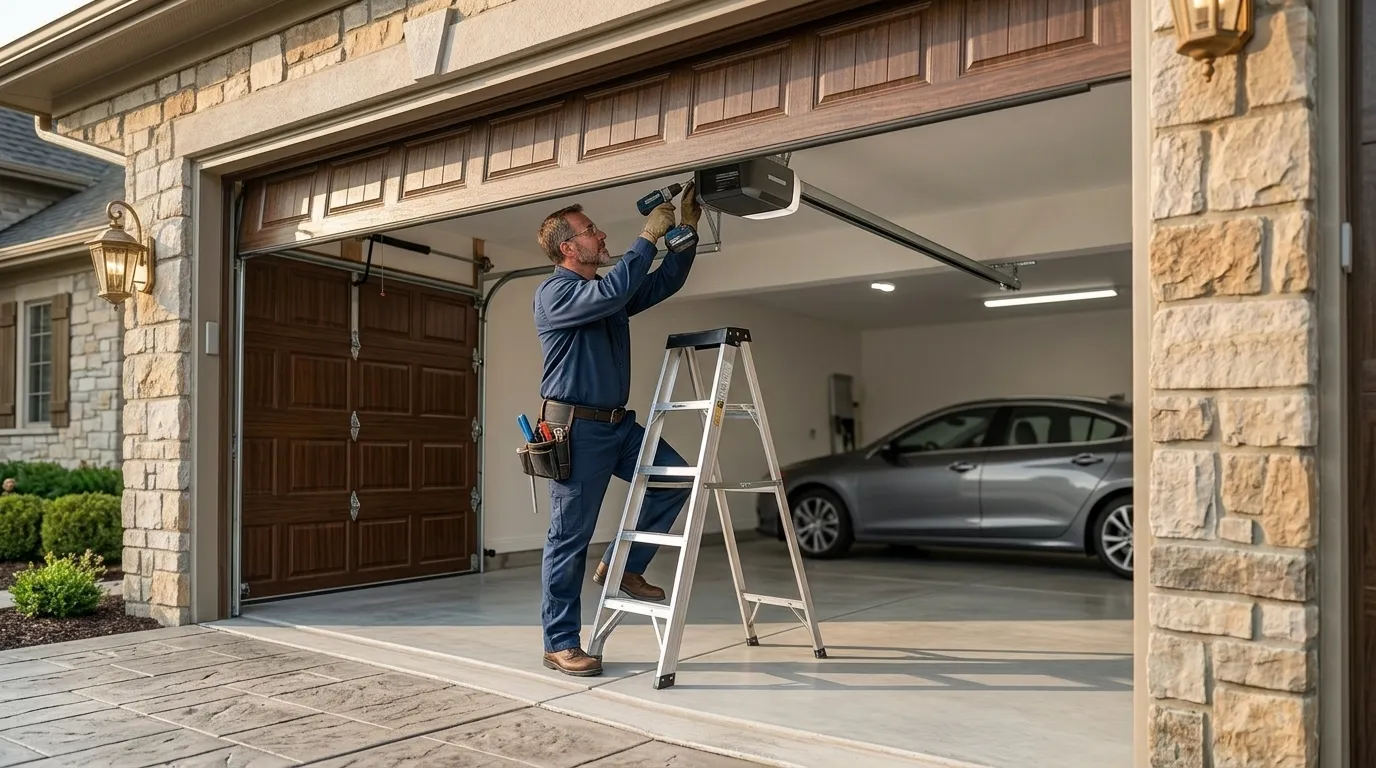
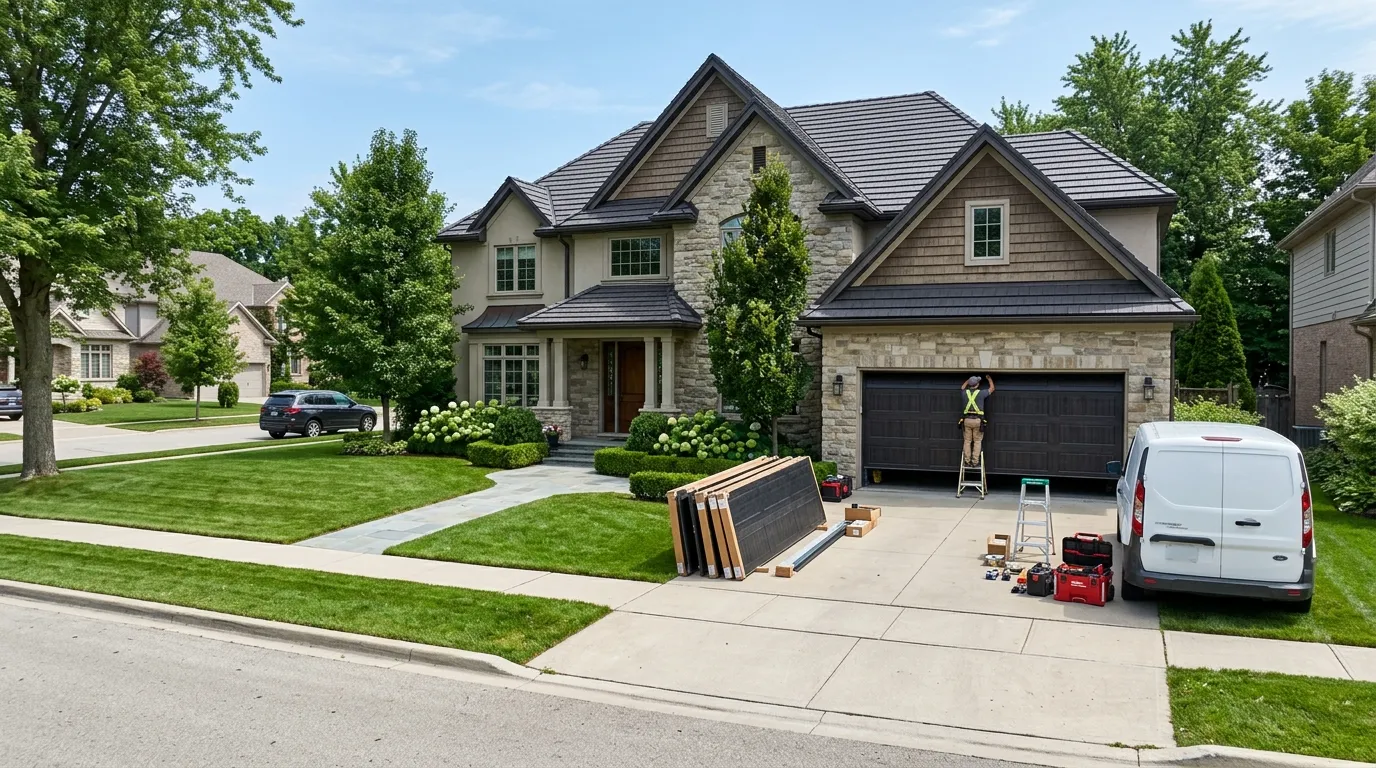
Most houses in this service area went up between 1971 and 2015, with the heaviest run of construction landing around 2005 across the nineteen named areas we cover. That spread matters more than people think, because a garage door opener isn't a fifty-year appliance - it's a ten-to-fifteen-year one, and a house built in the early 2000s is now on its second or third opener, sometimes still its first. Chain-drive units from that era shipped without battery backup as standard, and a lot of them are still bolted to the ceiling doing their job right up until the power drops and the door won't budge.
At a median household income of $109,528 across roughly 40,679 households, most owners here aren't stretched to add a battery backup unit if the current opener lacks one - it's a fix within reach, not a luxury upgrade. The limitation worth naming up front: we don't rewire your electrical panel or add a dedicated outlet if your garage doesn't have one near the opener. That's an electrician's job, and we'll tell you when you need one before we touch the opener itself.
What Changes With the Season
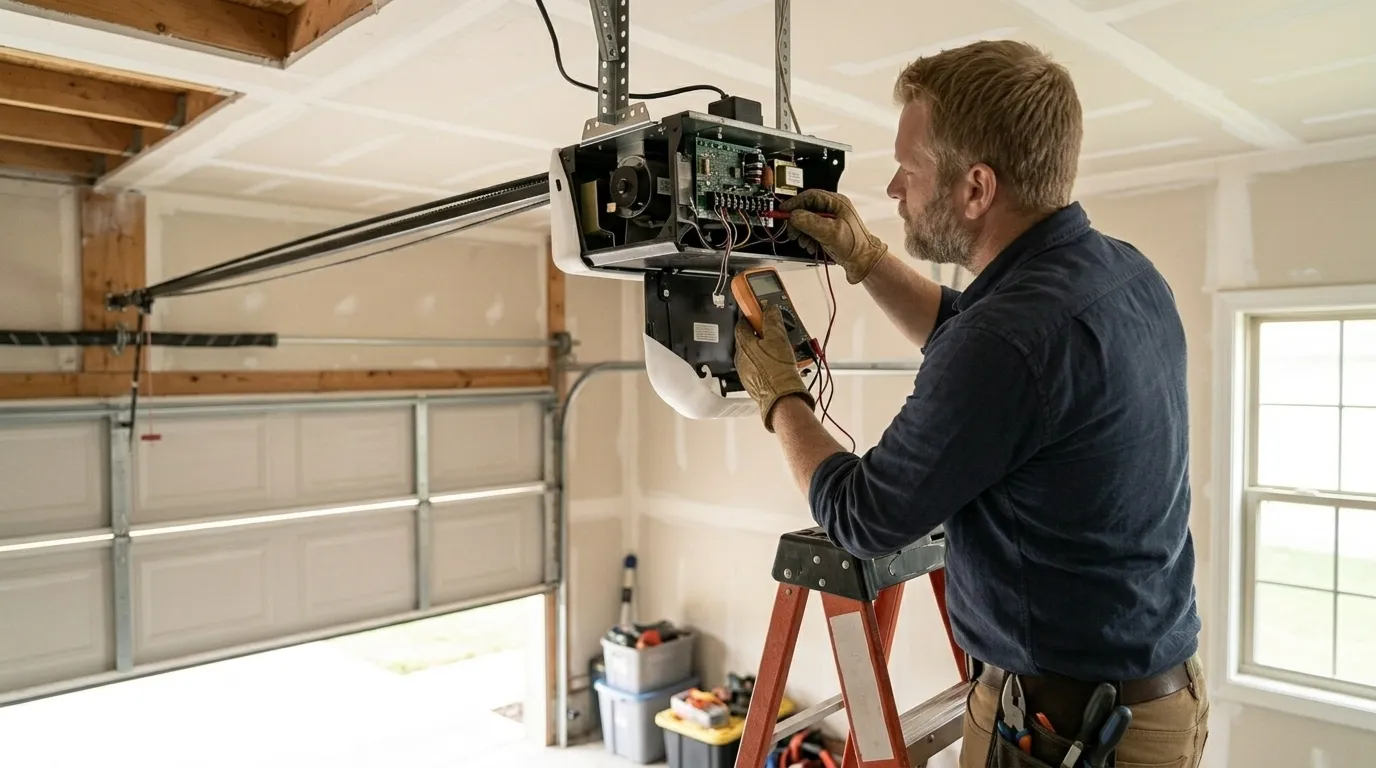
This area sits in a moderate heat band, which sounds mild until you've stood inside a closed garage in July. Garages here run hotter than the outside air for hours at a stretch, and that heat soaks into everything mounted near the ceiling - motor housing, capacitor, logic board, photo-eye sensors on the tracks. Circuit boards don't fail gracefully in heat; they get intermittent first. An opener that works fine at 7am and refuses to close at 4pm isn't broken, exactly, it's thermally stressed, and that's a pattern we see a lot more in the warm months than the cool ones.
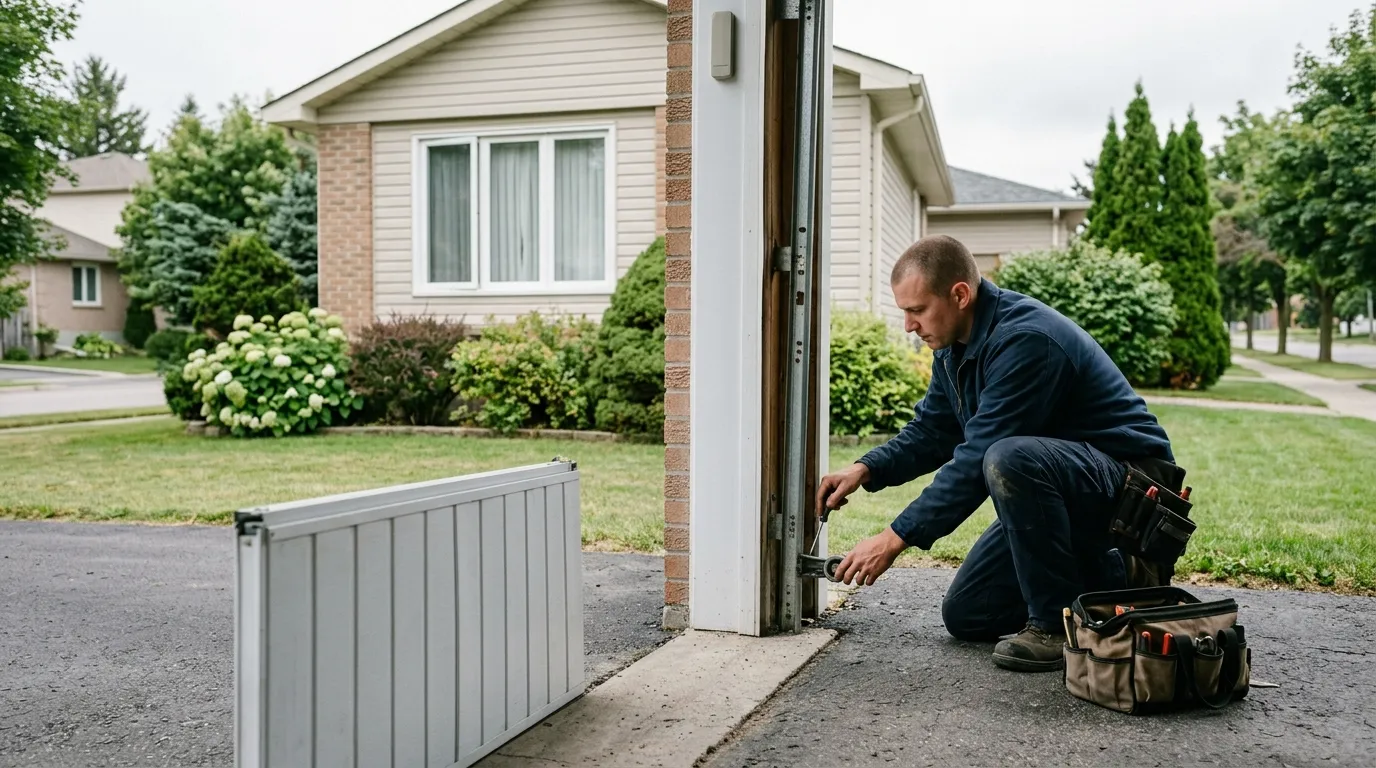
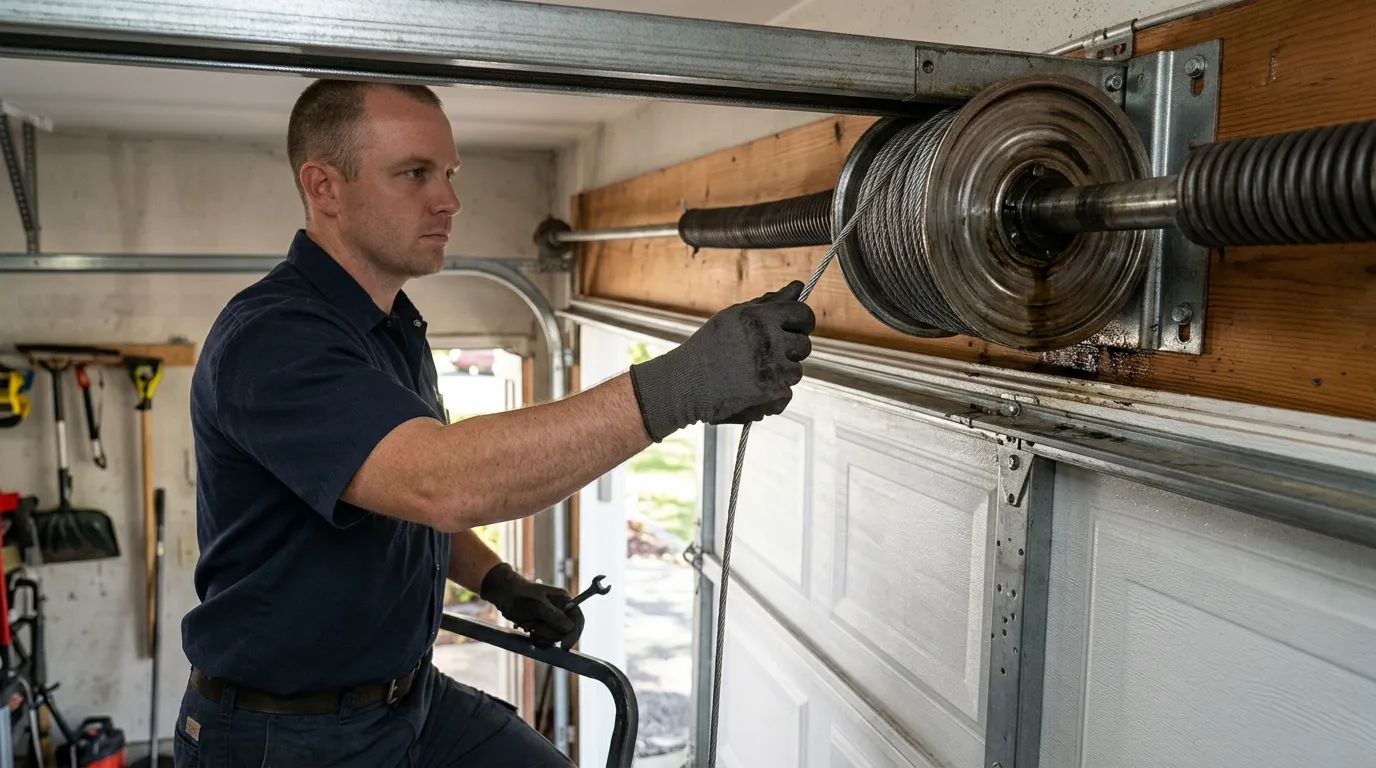
Sensors are the other seasonal casualty. Heat expansion shifts the mounting brackets on the tracks just enough to knock photo-eyes out of alignment, and a door that won't close but reverses instead is almost always that, not a spring or cable problem. It's a five-minute fix once you know to look there, and it's worth checking before you assume the whole opener needs replacing.
What to Look At First
Start with the manual release cord - the red one hanging from the trolley. If the power cuts and you need the door open, this is what disconnects the opener from the trolley so you can lift the door by hand. If you've never pulled it, test it now, not during an outage, because a stiff or seized release cord is common on openers original to houses from the early part of that 1971-2015 build window.
Next, check whether your opener has battery backup at all, and if it does, whether it still holds charge - most units have a test button or an indicator light for this. Then look at the photo-eye sensors on the bottom of the tracks: wipe the lenses, check they're both pointed at each other and not knocked sideways. Those three checks - release cord, battery backup, sensor alignment - cover the majority of opener complaints we see in houses of this age and this climate, before any real repair is needed.