What Causes It Around Here
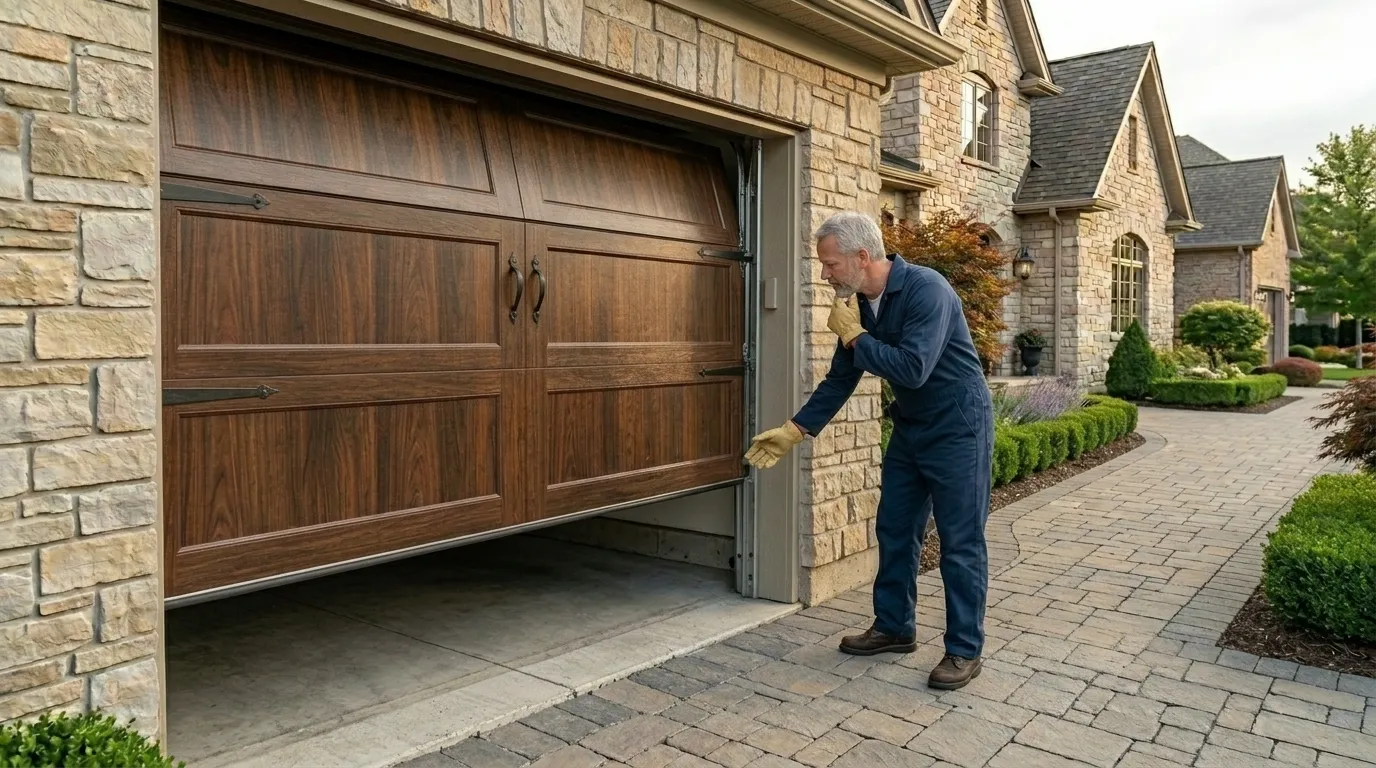
Most houses in Parker went up around 2005, part of the broader wave of construction across this service area that ran from the early 1970s into the mid-2010s with a median build year of 2005. That means a lot of Parker garages are still running the exact steel sectional door that came with the house, on the same hinges, same rollers, same end stiles. Nothing has been swapped out because nothing has failed hard enough yet to force the issue - until a panel takes a hit from a car bumper, a basketball, or a wind-driven branch and creases or bows.
A dented or bowed panel on a door this old is rarely an isolated problem. The steel gauge and the panel profile from a 2005 build often aren't stocked anymore in the exact match, so what starts as "just fix the one panel" can turn into sourcing a compatible section or replacing more of the door than the homeowner expected. Parker's climate sits in the moderate-heat band for this region, so panels here aren't fighting the kind of repeated freeze-thaw cracking you'd see further north - the damage tends to be impact, not weather fatigue.
Booking a Visit
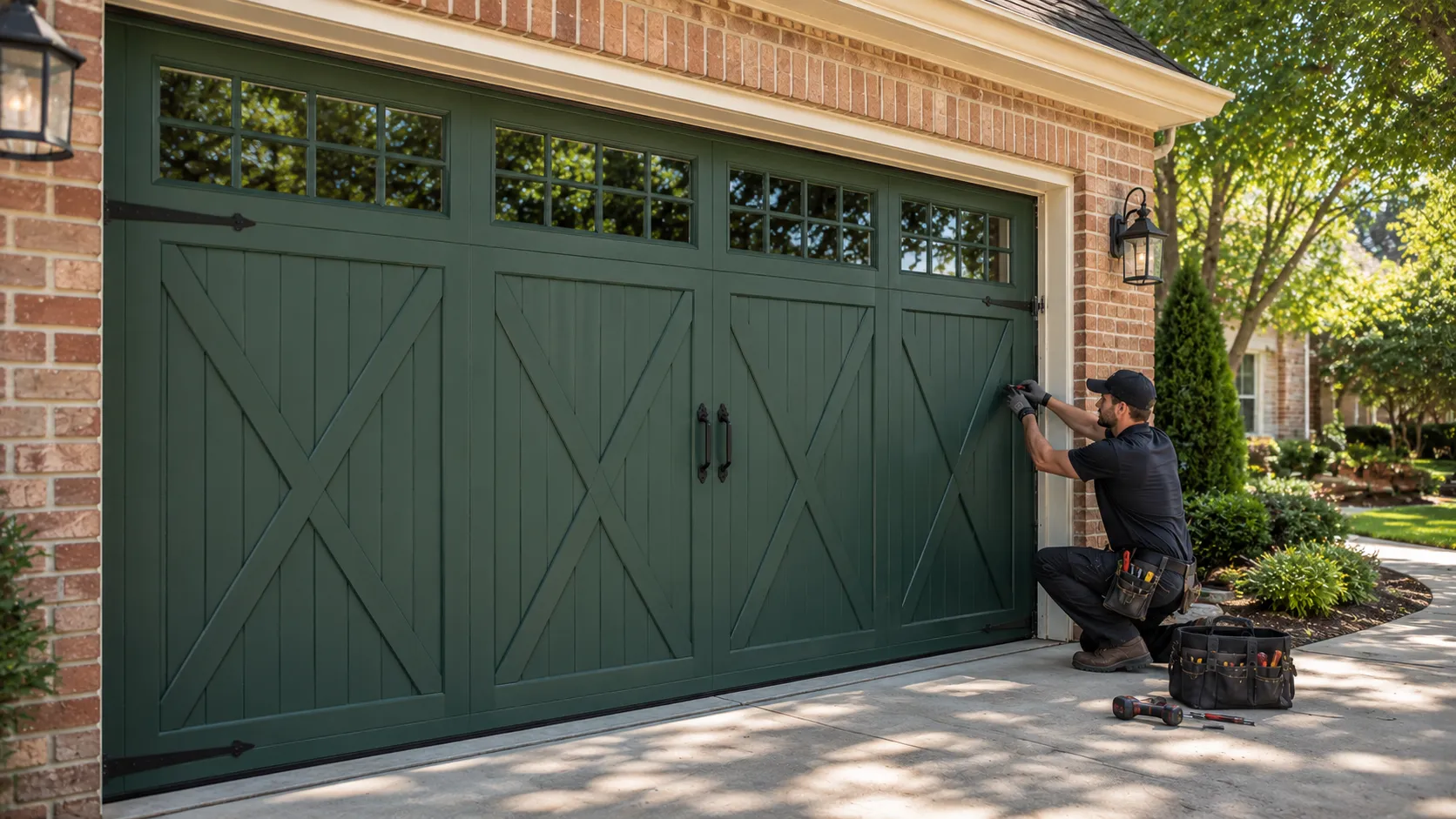
We work Parker from our McKinney base, about ten miles out, so a panel job here gets scheduled the same way any other stop on that route does - we look at the door, confirm the panel profile and color match, and quote before anything gets ordered. Parker is a smaller pocket of the area we cover, with roughly 1,553 households, and a lot of those are higher-income properties where the original door was a step up from builder-grade to begin with - insulated steel, sometimes a carriage-style face. That matters for matching: a generic flat panel doesn't belong on a door that started out with more detail.
We don't keep a stock truck sitting in Parker itself. What we bring depends on what the visit tells us the door needs, so the first trip is usually a look-and-measure, and the second is the fix, unless the match is a common enough profile that we can bring it the first time. We'll tell you straight which case you're in before you book the second visit.
What Is on the Truck
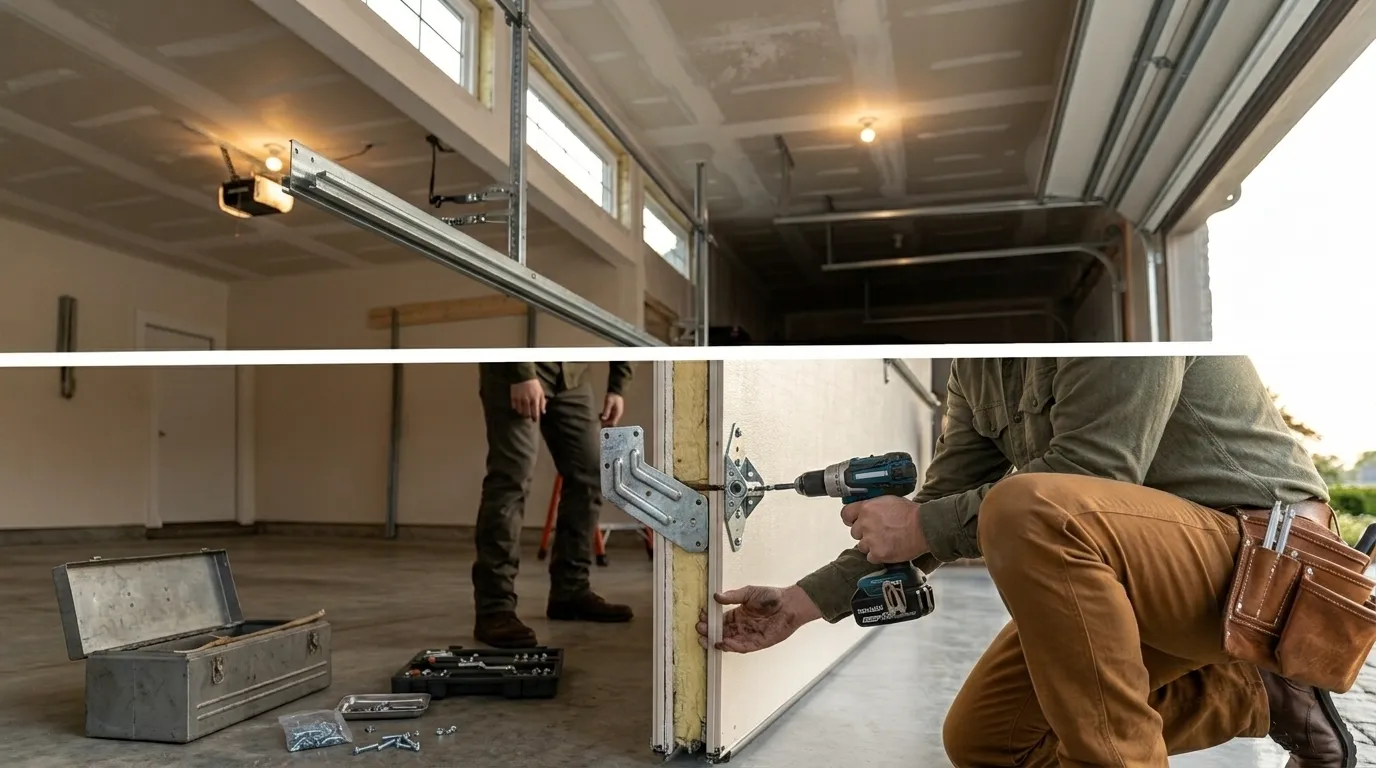
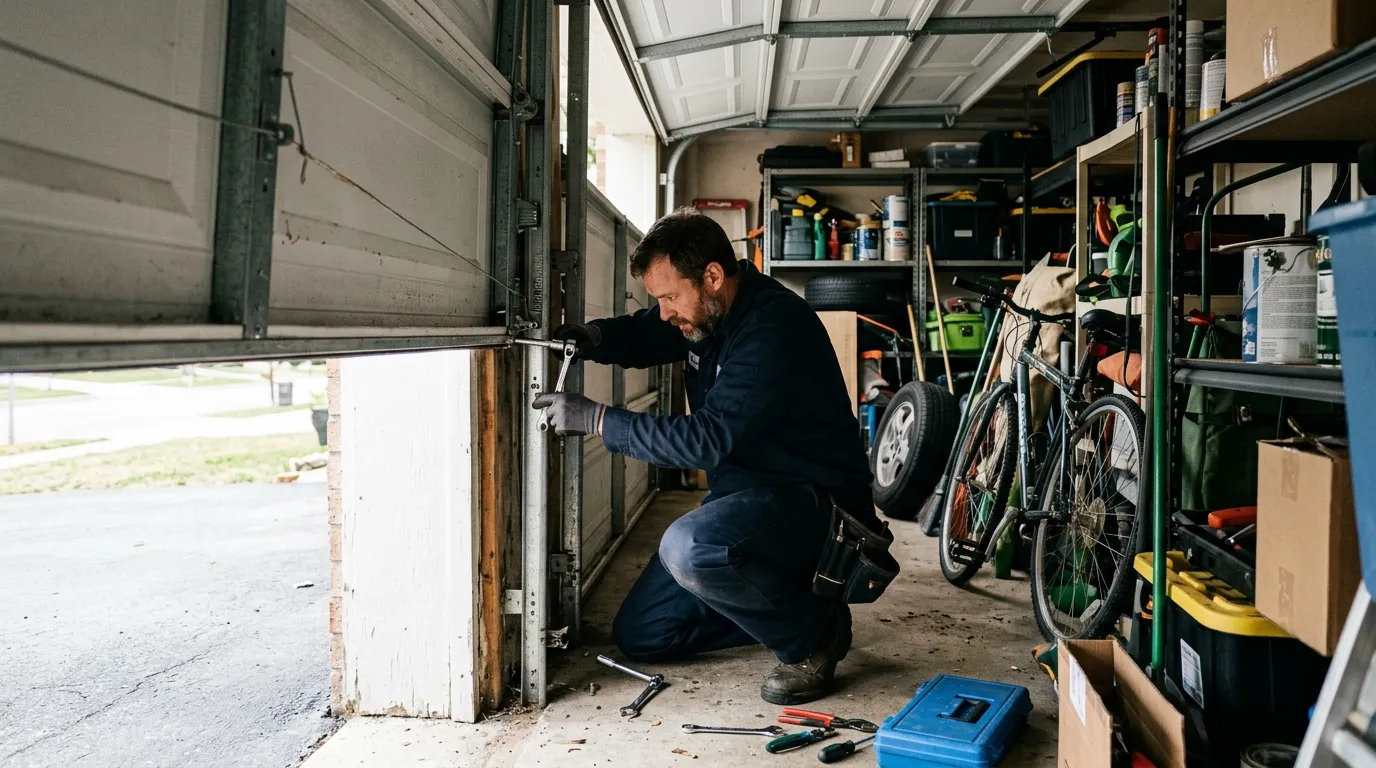
For a panel job we bring torsion springs sized for the door weight, standard-lift cable, galvanized hinges and end brackets, and a run of roller sizes, because doors this age often need at least one hinge or roller swapped alongside the panel itself. We also carry sealant and touch-up paint to blend a new section into a faded original, since a 2005 door has had close to twenty years of sun exposure and rarely matches a factory-fresh panel straight out of the box.
What we don't carry as standard stock is every discontinued panel profile from that build era. If your door used a pattern that's since been retired by the manufacturer, we may need to order the section rather than pull it off the truck, and that adds a few days. We'd rather tell you that up front than promise a same-visit fix we can't deliver.
The DIY Question
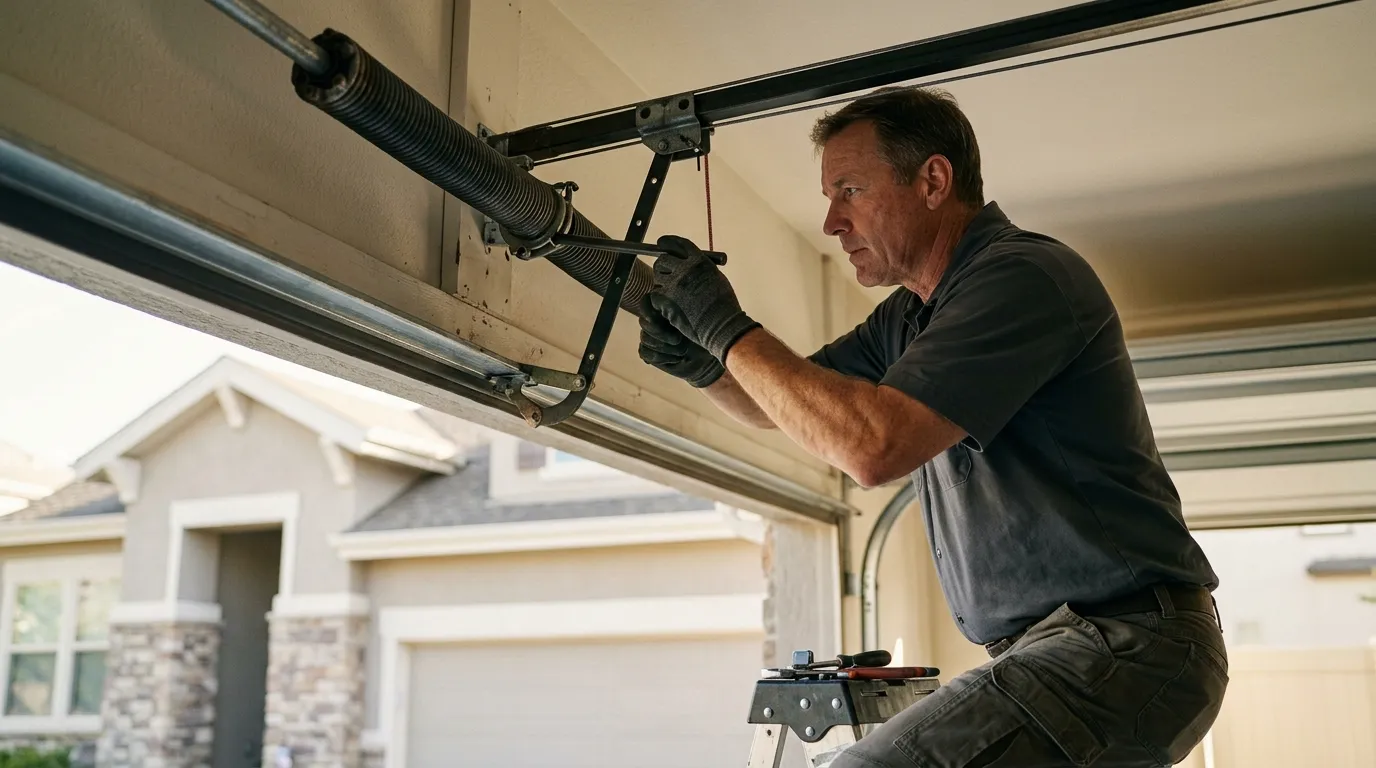
Swapping a single panel looks simple from a video, and on a newer door with common hardware it sometimes is. On a door original to 2005, the risk is the torsion spring and the track alignment, not the panel bolts themselves. Loosening the wrong bracket on a door that's held the same spring tension for two decades can let the whole section drop, and re-tensioning a torsion spring without the right bar is one of the few jobs in this trade that puts people in the ER.
If the damage is cosmetic - a shallow dent, a scuff - and the door still opens square, that's a reasonable one to leave alone or handle yourself with a plunger kit made for it. If the panel is creased, the door binds, or a hinge is bent, that's a call, not a Saturday project. We'll tell you honestly if a repair isn't worth it compared to replacing the section, since on some older profiles the labor to hunt down a match costs more than a straightforward swap.