What Causes It Around Here
Parker is a small place - about 1,553 households, nowhere near the size of the bigger suburbs we cover from McKinney. That matters for installation work because a town this size doesn't have the churn of a big subdivision build-out; most of what we see is homeowners replacing a door that's original to the house or upgrading one that's aged out, not a contractor doing tract-home installs by the dozen.
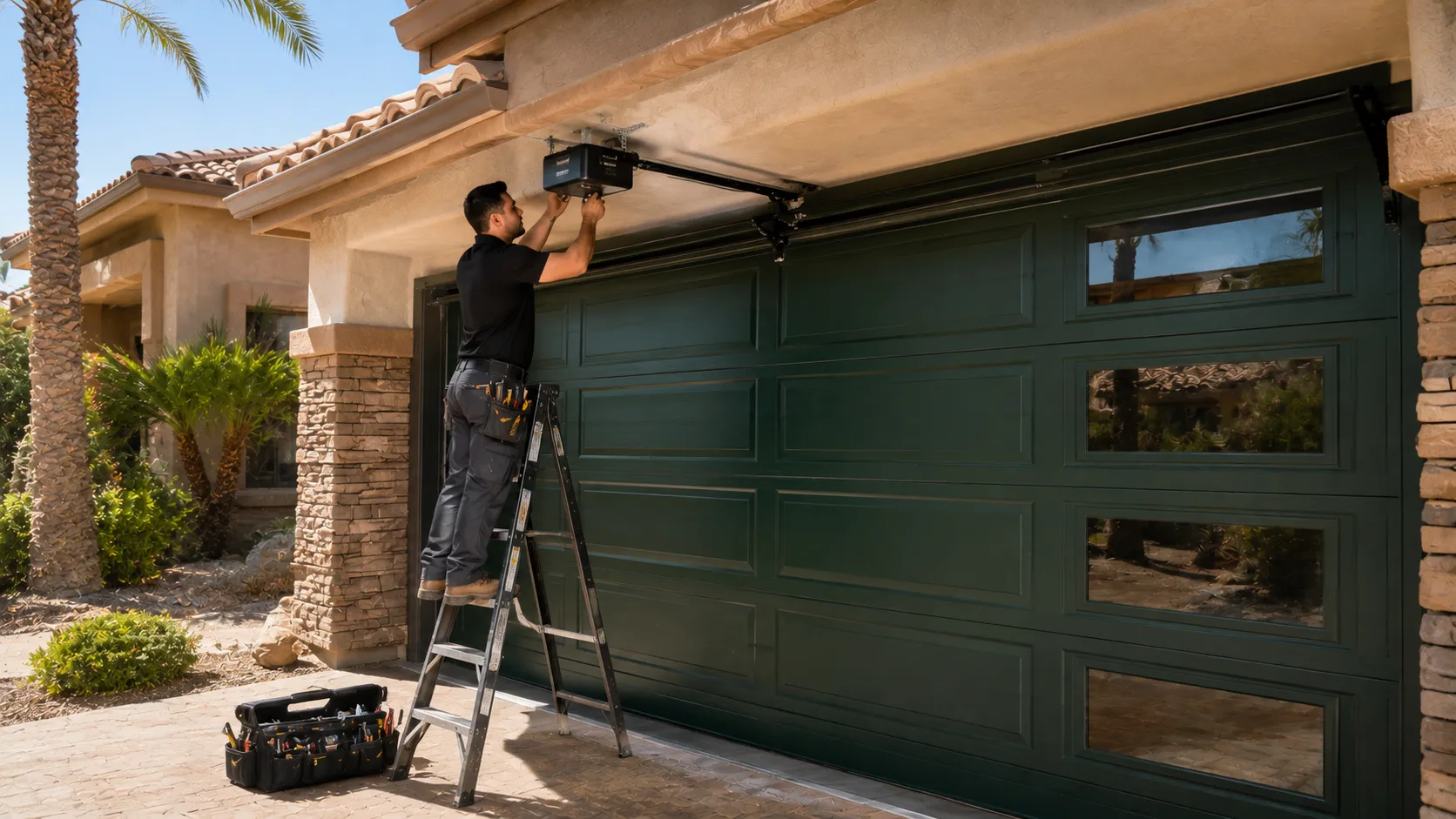
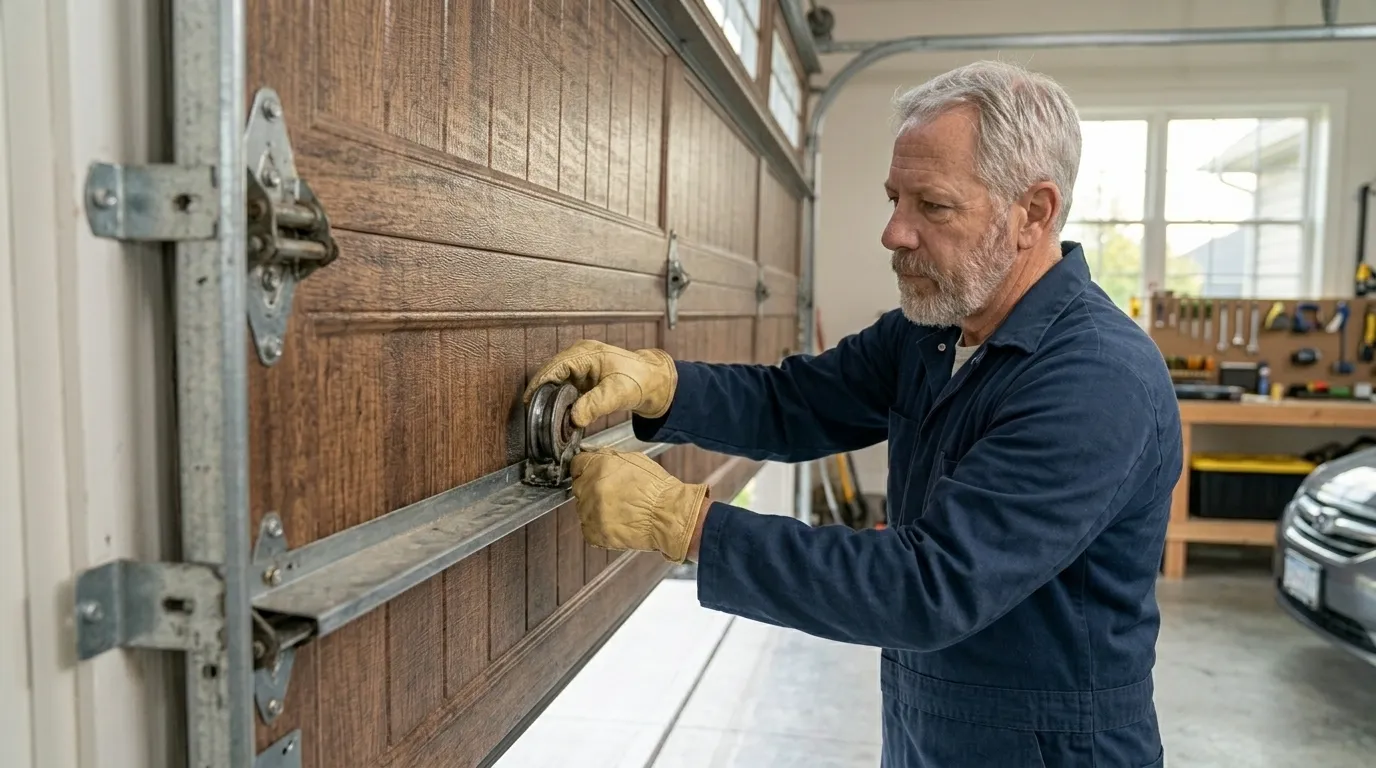
The housing stock across this part of the service area runs 1971 to 2015 with a median build year of 2005, and Parker's own median lines up right at that 2005 mark. That means the doors we're pulling out are mostly builder-grade steel from the mid-2000s - insulated panels, standard torsion springs sized for that era's door weight, openers that are 15-20 years old and long past their reasonable service life. The failure isn't corrosion or storm damage; it's the same panels and hardware just wearing down across two decades of daily cycles.
Median household income in Parker runs well above the wider area's figure - over $216,000 versus roughly $109,500 across the broader service territory. Practically, that shows up as homeowners choosing insulated steel or custom wood-look composite doors over the cheapest option, and asking for openers with battery backup and smart controls rather than the base model.
Booking a Visit
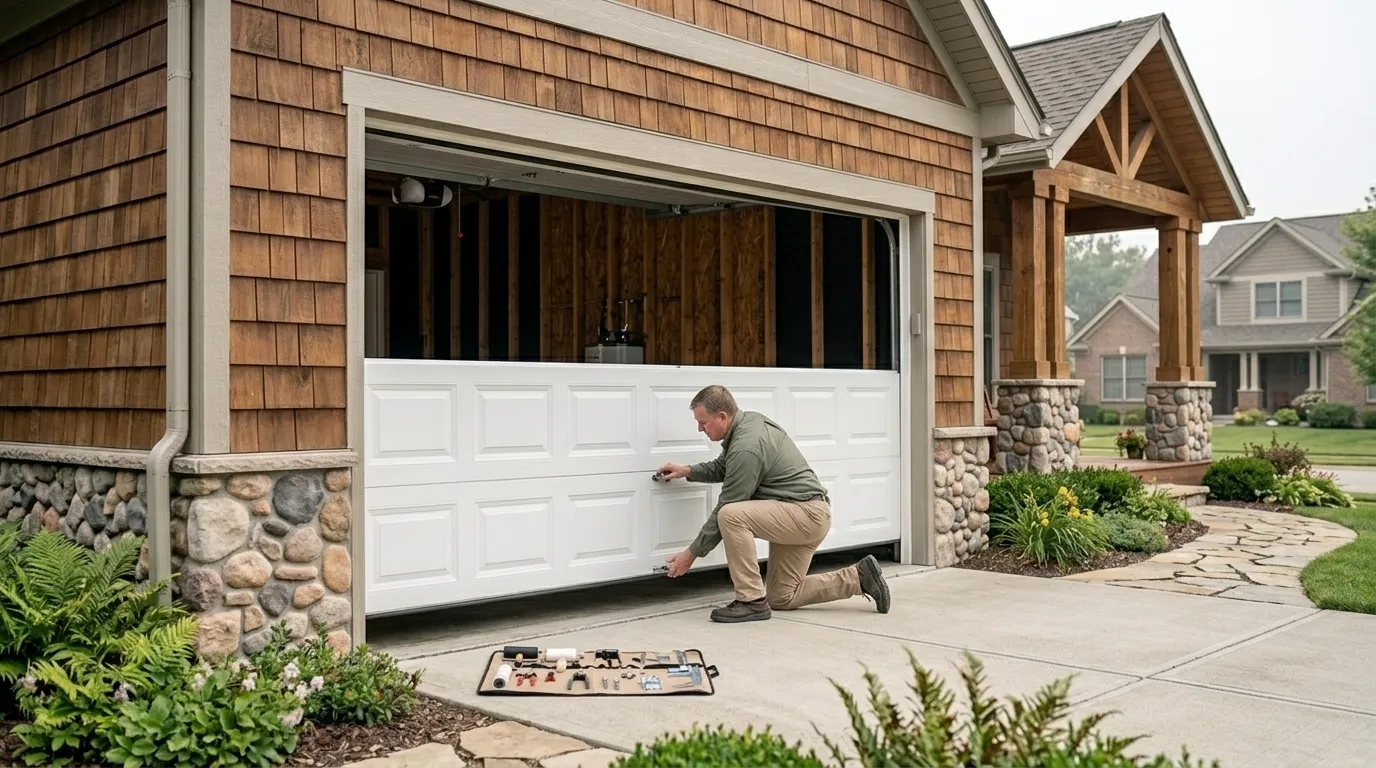
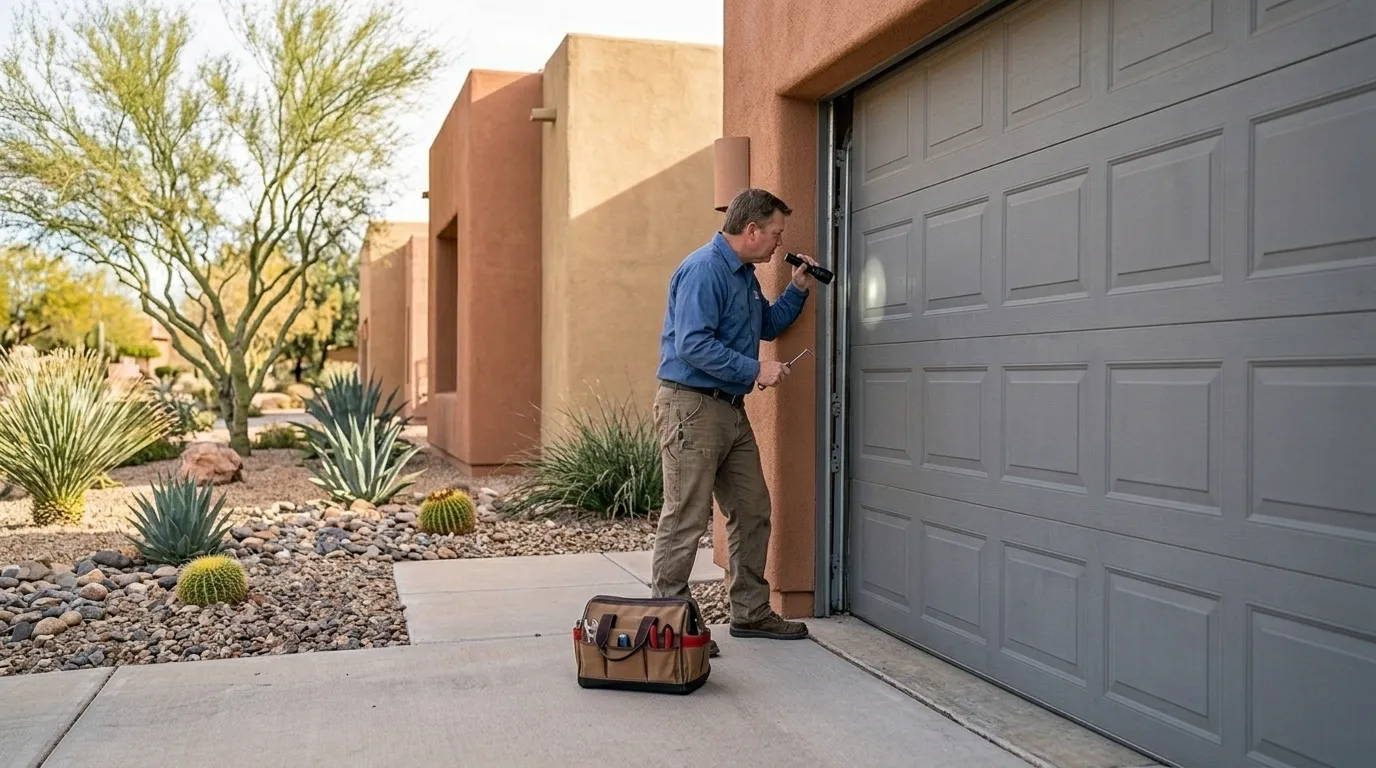
We run this job out of McKinney, about 10 miles from Parker. There's no branch office or drop-in counter here - you call, we schedule a truck, and we come to you. For a new install we need to see the opening in person before we can quote a firm price: header height, track clearance, whether the existing framing is square, and whether the current opener wiring can be reused or needs to be run new.
Because Parker is a smaller town, we're not running multiple trucks through it on a given day the way we might in a denser suburb. That's not a downside for you - it just means we book the visit around your schedule rather than trying to cluster it with other stops nearby.
What Is on the Truck
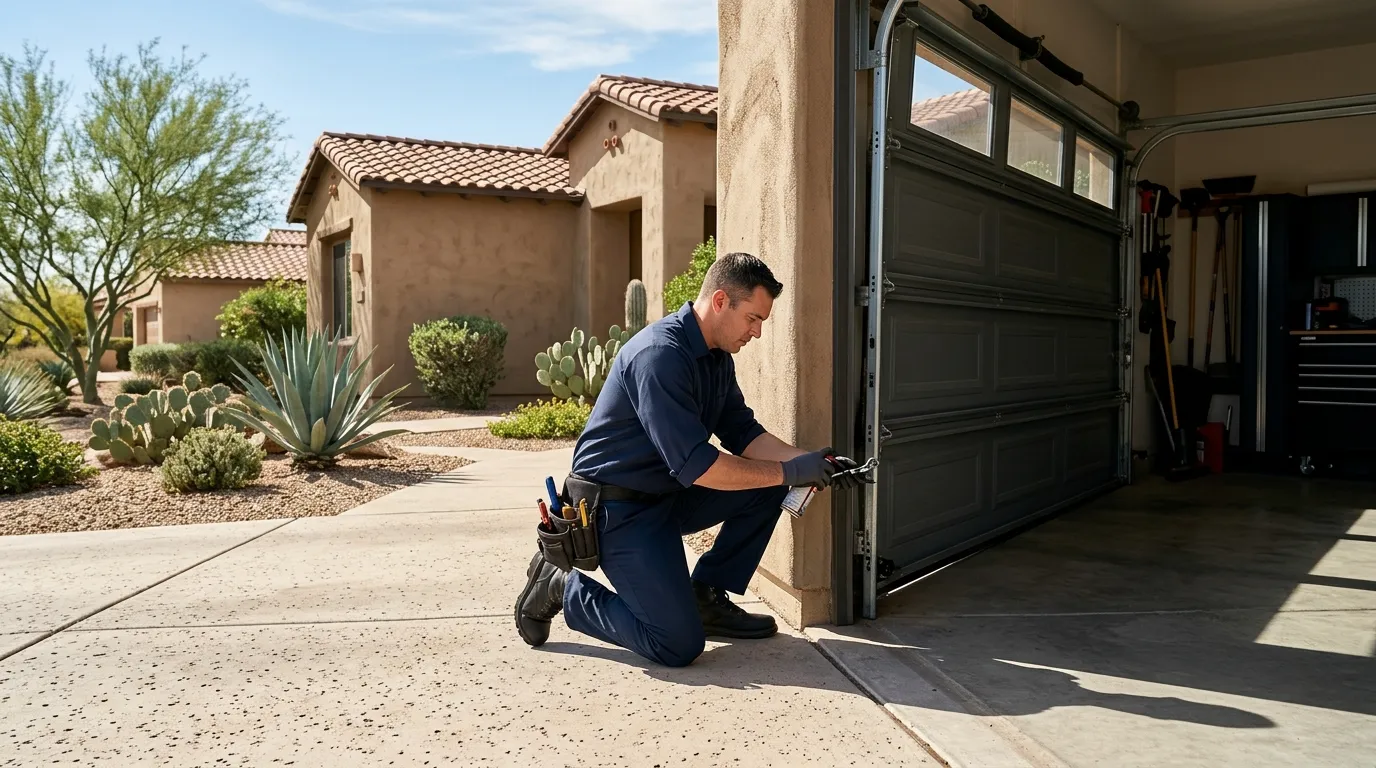
For a new install we carry standard steel and insulated door sections in common widths, torsion springs sized to a range of door weights, new track and rollers, and openers from entry-level chain-drive to belt-drive units with battery backup. What we don't carry is custom architectural doors - carriage-style wood or specialty composite panels get special-ordered once we've measured the opening and confirmed the spec with you.
We also stock the fasteners, weatherstripping, and bottom seals that go with a full install, since the climate here runs a moderate heat band rather than extreme cold - that shapes which seal material and insulation rating actually make sense for the door, and we don't oversell insulation you don't need for the winters this area gets.
The DIY Question
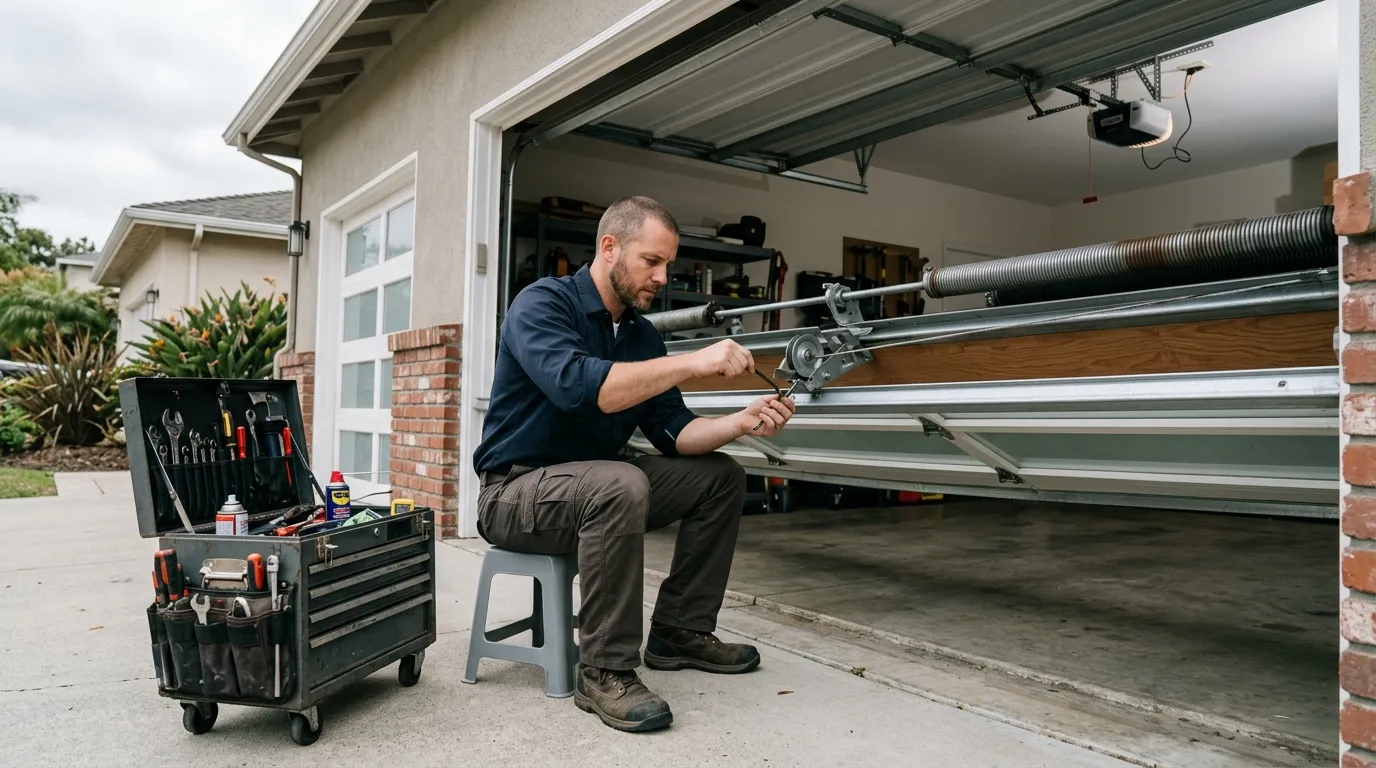
Installing a garage door yourself is possible if you've done it before and understand torsion spring tension - but a torsion spring under load is genuinely dangerous, and it's the part of this job that sends people to the ER when it's rushed. If you're set on doing the panel and track work yourself, we'd still tell you to have a pro handle the spring and cable side.
Where DIY makes less sense here specifically: with median household income in Parker running well above the surrounding area, the doors people are installing tend to be heavier insulated units or wider double doors, which need springs and hardware rated for more weight than a bargain steel door. Getting that sizing wrong doesn't fail gracefully - it fails as a door that won't stay open or a spring that lets go.