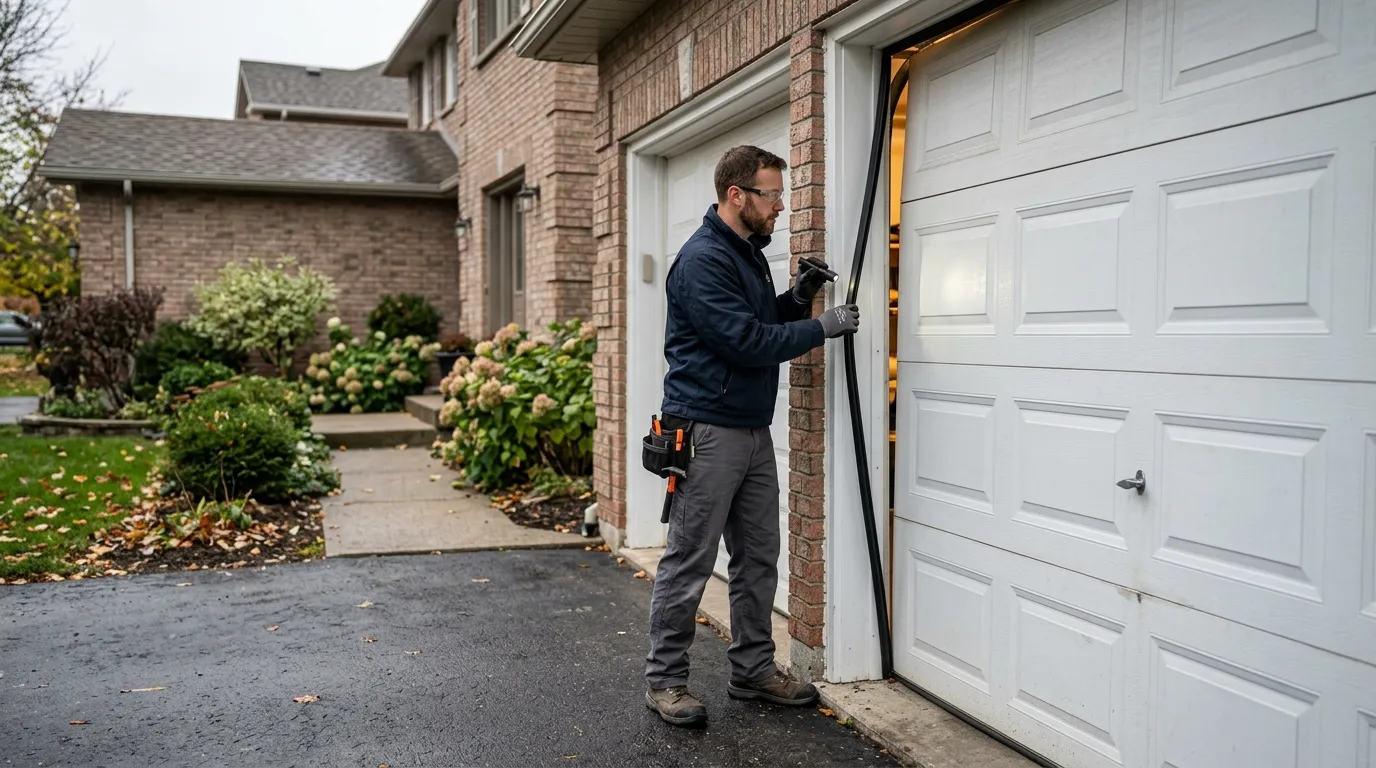
The Cost of This Job
We can't quote a number here because it depends on what's actually wrong once we're standing in front of the unit, but we can tell you what drives the cost either way. A logic board swap or a new sensor eye costs less than replacing a stripped drive gear or a dead motor, and if the opener is old enough that the manufacturer doesn't make parts for it anymore, repair stops being the cheaper option and full replacement takes over. Most of the openers we see in this area went in with the original home build or a remodel sometime after 1971, with a lot of that stock dating to construction around 2005, so parts availability is a real factor - not every brand from that era still has a supply chain behind it. If your opener is chain-drive from that period and the belt-drive replacement units on shelves now don't share a rail system with it, that changes the math too. We'll tell you flat out when a repair isn't worth doing, because sinking money into a board for a unit that's going to fail somewhere else next year doesn't help you.
What Causes It Around Here
The housing stock across this service area runs mostly 1971 to 2015, with the bulk of it built out in the 2000s boom - that's a lot of openers now sitting in the 15-to-20-year range, which is right where circuit boards, capacitors, and drive gears start failing on their own timeline regardless of how well the door itself was maintained. Heat in this area sits in the moderate band, not the extreme swings you'd get further south or in a desert climate, but a garage that bakes all afternoon still runs hotter than the rest of the house, and that heat cycling is hard on the plastic gears and the sealed lubricant inside older opener units. We see it most in chain-drive openers original to a 2000s-era build: the gear that turns the chain sprocket is nylon, it wears down slowly, and one day the motor runs but the door doesn't move at all. Newer belt-drive units handle heat cycling better, but the ones original to homes built in that mid-2000s window are now old enough that this failure mode is common, not rare.
The Complications
Homes across this area range from builds in the early 1970s through ones finished as recently as 2015, and the opener hardware doesn't match across that range - a unit installed with a house built in the 1970s or 80s may be on a rail and bracket system that current replacement openers don't bolt to without an adapter kit, and we don't always have that part on the truck. If your door itself is heavier than standard - insulated, or a wider double door - some of the lighter-duty openers sold as universal replacements aren't rated for it, and putting an undersized unit on a heavy door just moves the failure point to the motor instead of the gear. We also run into homes where the opener has been swapped once already by a previous owner and doesn't match the door's original spring tension, which throws off diagnosis until we've actually got eyes on the whole system, not just the opener box. None of this is unusual for a service area with a housing stock this spread out in age - it just means the first visit is sometimes a diagnosis-only visit before we know what the fix actually requires.