The Cost of This Job
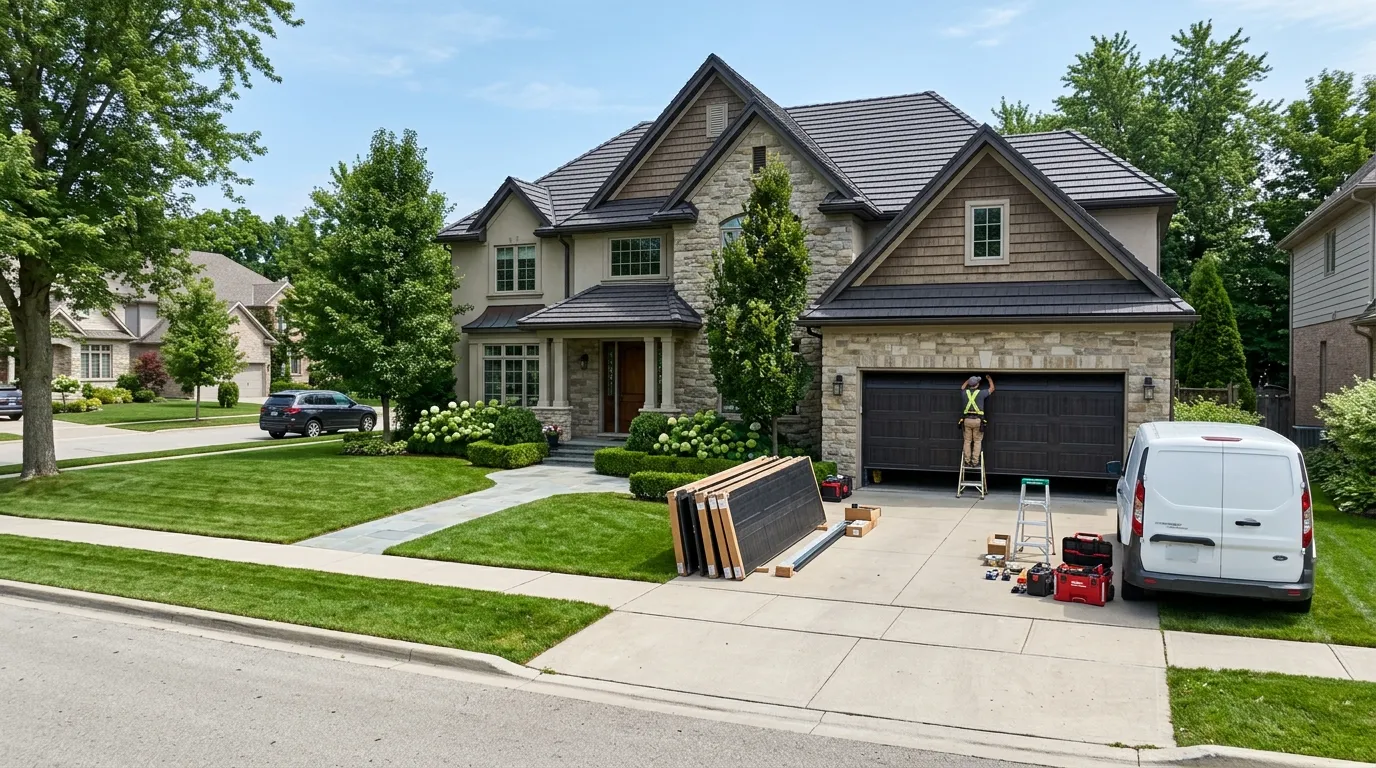
We don't post a flat number for opener installation because the job changes with what's already on your ceiling and what you're putting up in its place. A straight swap onto existing brackets and wiring is a different job than a full new rail, new logic board, and new wall control. Belt-drive and DC-motor openers cost more up front than chain-drive units but run quieter, which matters if you've got a bedroom over the garage.
What we can tell you: this is a service area of mostly higher-income households (median household income here runs $109,528), and we see more requests for battery-backup and smart-phone-enabled openers than we did years ago - those units cost more than a basic chain-drive box. If your existing rail, hinges, and door hardware are still sound, reusing them keeps the job cheaper than a full teardown.
One honest limitation: we don't quote exact pricing over the phone without seeing the door and the opener you have now. Track condition, spring balance, and wiring age all move the number, and guessing wrong on any of those means a callback nobody wants.
What Causes It Around Here
Housing across this service area was mostly built between 1971 and 2015, with the median build year landing around 2005 - and across the 19 communities we cover, that 2000s-era construction is the dominant stock. That matters for openers specifically: a huge share of garage door openers in these houses are original to construction, meaning they're now 15 to 20 years old, right at or past the working life of the motor, gears, and logic board.
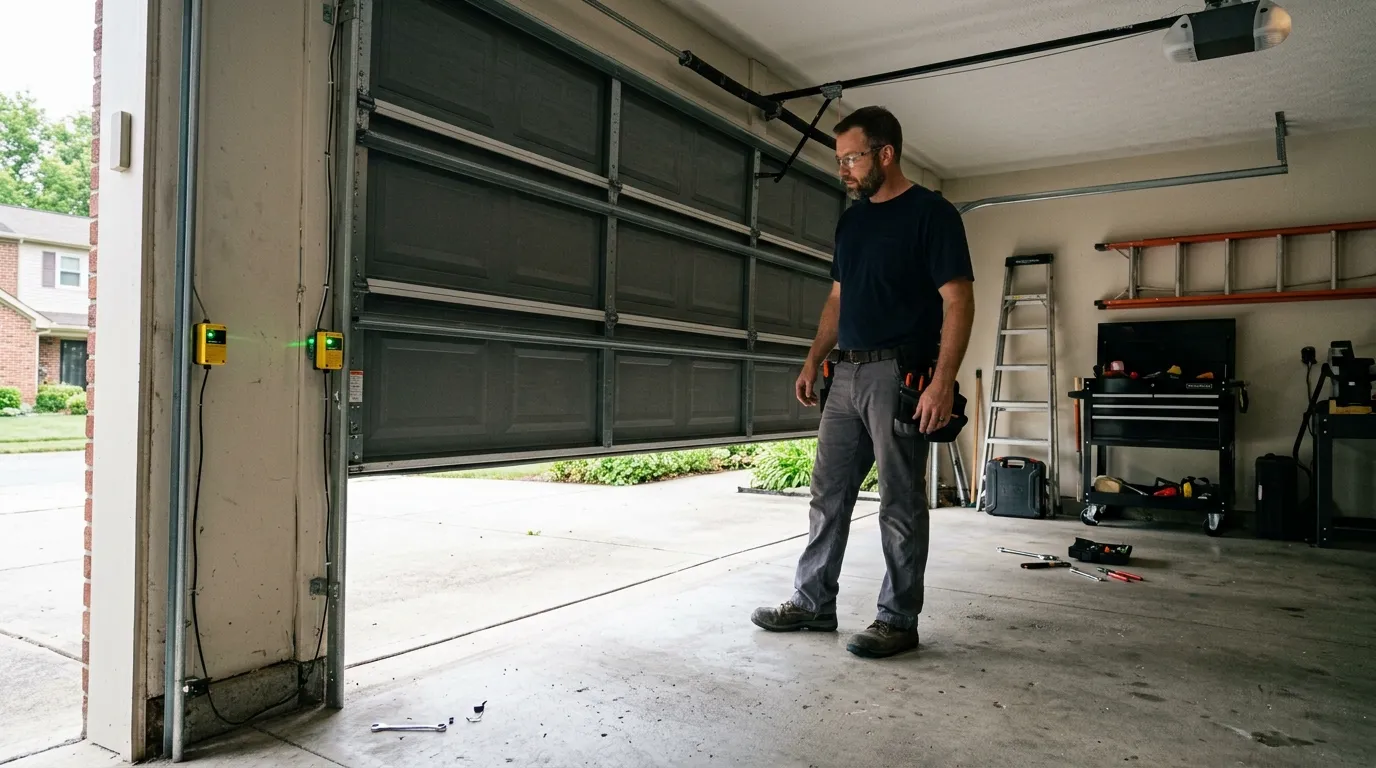
The climate band here is moderate heat, not the extreme swings you'd get farther south or in a desert climate, so we don't see the same rate of heat-cracked plastic housings or capacitor failures you'd get in a harsher band. What we do see is straightforward mechanical wear - worn drive gears, tired capacitors on older chain-drive units, and safety sensors that have drifted out of alignment after a decade and a half of garage door traffic.
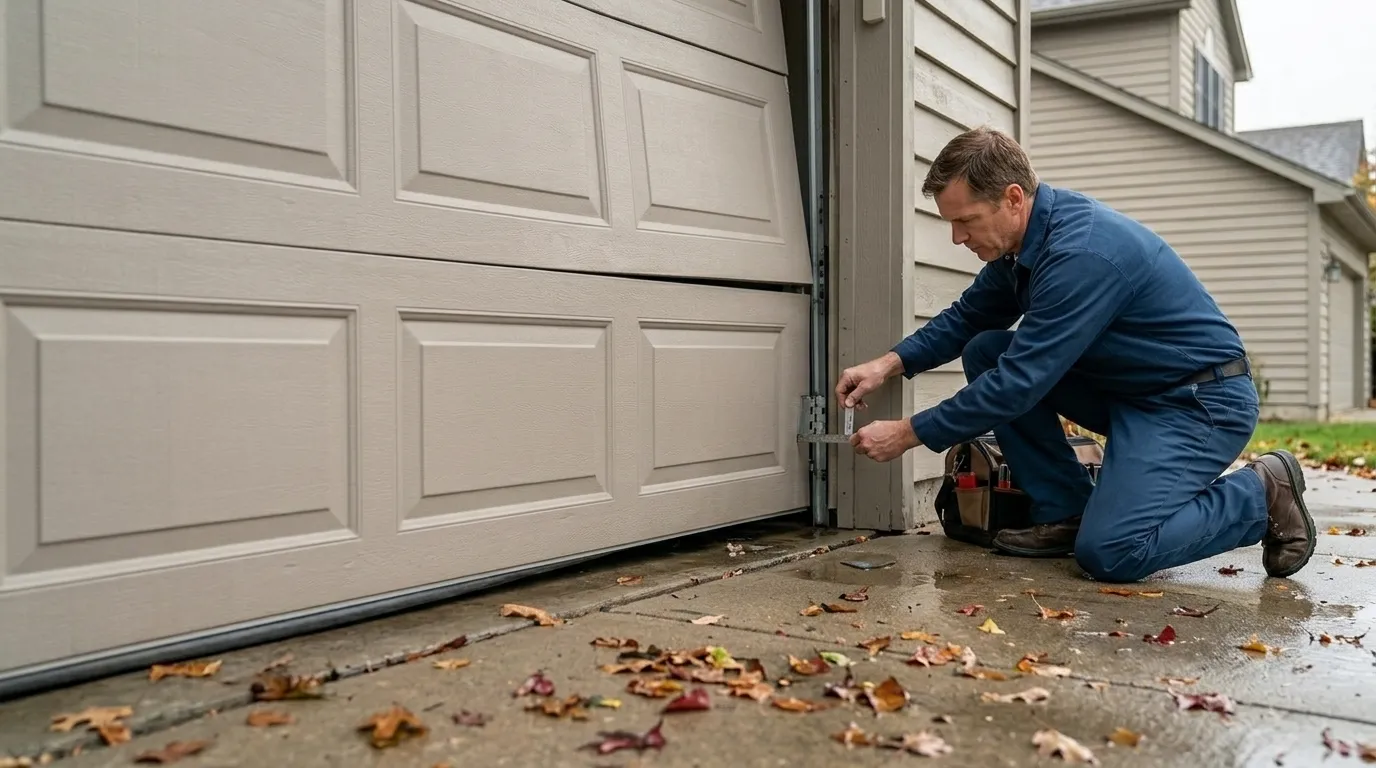
Put those two things together and you get a predictable pattern: original-equipment openers from the mid-2000s building boom reaching end of life at roughly the same time, which is why opener replacement calls cluster the way they do across this stock rather than being random failures.
The Complications
Garage ceiling height and joist spacing decide what rail and mounting hardware will actually fit - a lot of these houses have trusses spaced in a way that limits where you can hang a standard bracket, so we sometimes have to build out a support rather than bolt straight to the joist.
Older wiring is another wrinkle. Houses from the earlier end of the 1971-2015 build range sometimes have a single switched outlet in the garage ceiling with no dedicated circuit, which limits which openers we can put in without an electrician involved first - that's outside what we do.
If you want smart-phone control or battery backup, the opener needs a stronger Wi-Fi signal in the garage than most of these houses were wired for, and battery-backup units need a nearby outlet that isn't already loaded down with a freezer or shop equipment.
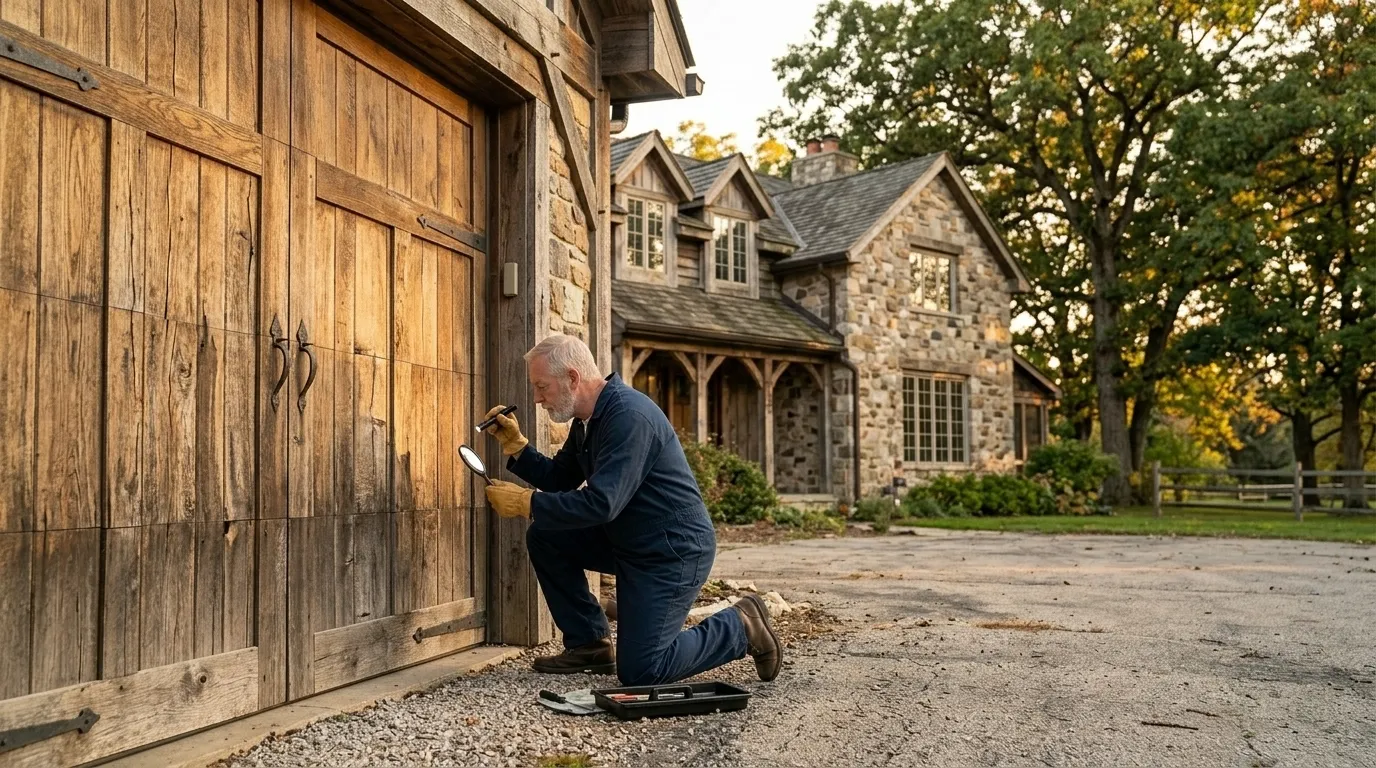
With 31,785 owner-occupied houses in this service area, we run into every one of these combinations regularly, but each one still needs to be checked in person before we can tell you exactly what the install looks like.