The Complications
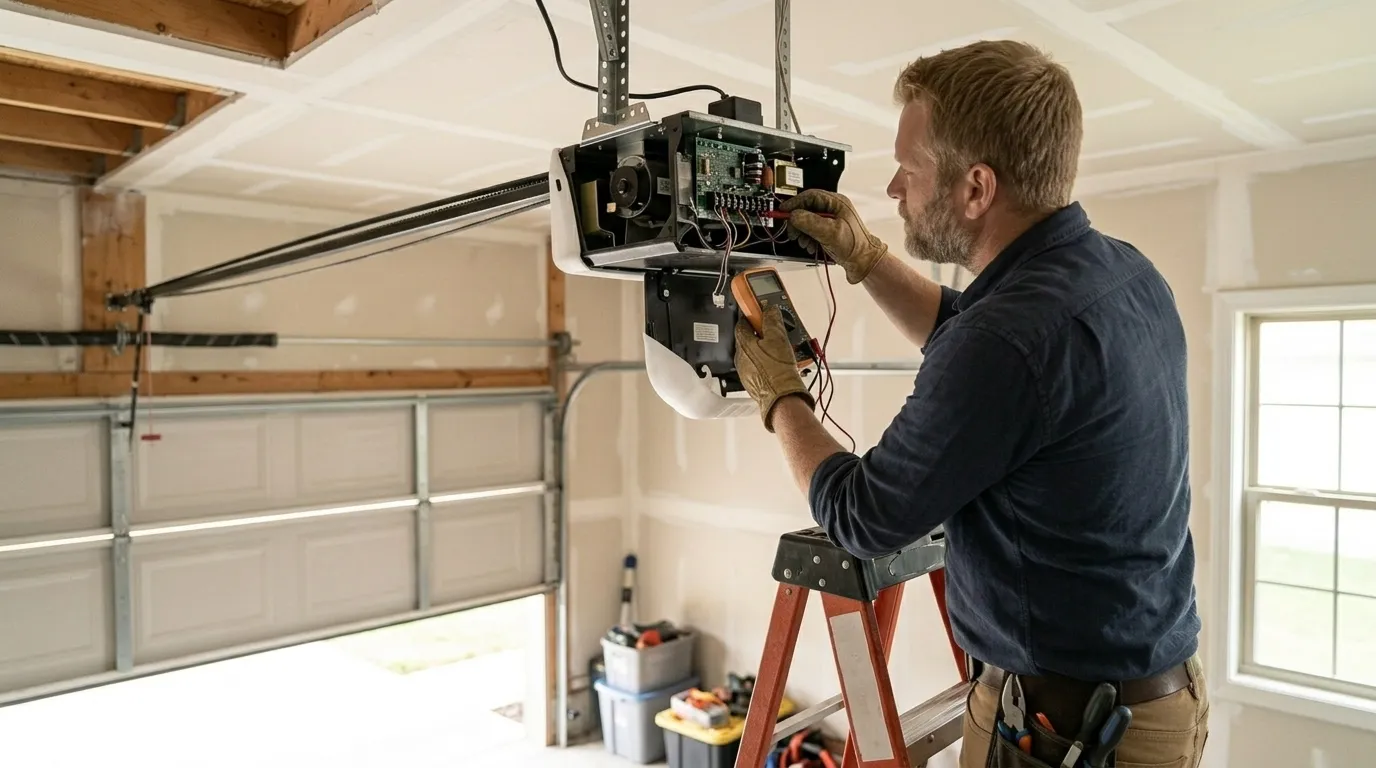
Lowry Crossing's houses carry a median build year of 1994, a full decade older than the 2005 median across the wider service area we cover. That gap matters more for openers than for the doors themselves. A door panel from 1994 can often be reinforced or matched well enough. An opener from that era, or even its replacement bought in the 2000s, is usually on borrowed time - worn drive gears, a capacitor that's been heating and cooling for twenty-plus years, logic boards that were never designed to talk to a phone app. We see units here that have already been swapped once, and the second unit is now showing the same wear pattern as the first. That's a different job than walking into a newer subdivision where every opener is still original and under ten years old. It changes what we bring on the truck and what we tell you before we start unscrewing anything.
Booking a Visit
We run this job out of McKinney, about seven miles from Lowry Crossing. There's no branch office here - the truck comes from town, does the work, and heads back. That's worth knowing up front because it means scheduling is built around one crew's route for the day, not a local dispatcher sitting a few streets over. We don't promise a same-hour window because we don't have the local depot to back that promise up. What we can do is give you a real appointment window once we know what's wrong with the opener - chain, belt, or screw drive, and whether it's a dead motor or a bad sensor - because that decides how much time the visit needs.
The Cost of This Job
Lowry Crossing has a median household income of $110,357, which puts most owners here in a position to choose full replacement over a patchwork repair once a unit is old enough that parts get hard to find. We're not going to quote a number in this space because the actual cost depends on whether it's a sensor, a capacitor, a gear kit, or a full motor swap - and we don't want to hand you a figure that isn't grounded in what's actually wrong with your opener. What we will say is that the decision usually comes down to age: an opener built in the early 2000s with a bad board is often cheaper to replace outright than to keep repairing piece by piece, especially once you've already fixed it once.
What Causes It Around Here
The climate band for this area sits in the moderate-heat range rather than extreme, but moderate heat over twenty or thirty years still does its work on an opener motor - the capacitor cycles through heat and cool more times than it was built for, and thermal cutoffs start tripping earlier each summer. Combine that with houses that median out at 1994 construction, and you get openers that have already lived through one or two Texas summers' worth of expansion and contraction in the garage itself, which stresses the mounting brackets and rail alignment along with the motor. It's not a dramatic failure mode, just a slow one, and it's why a lot of the calls we get here are for a unit that's been getting louder and slower for months before it finally quits.