How Long It Takes
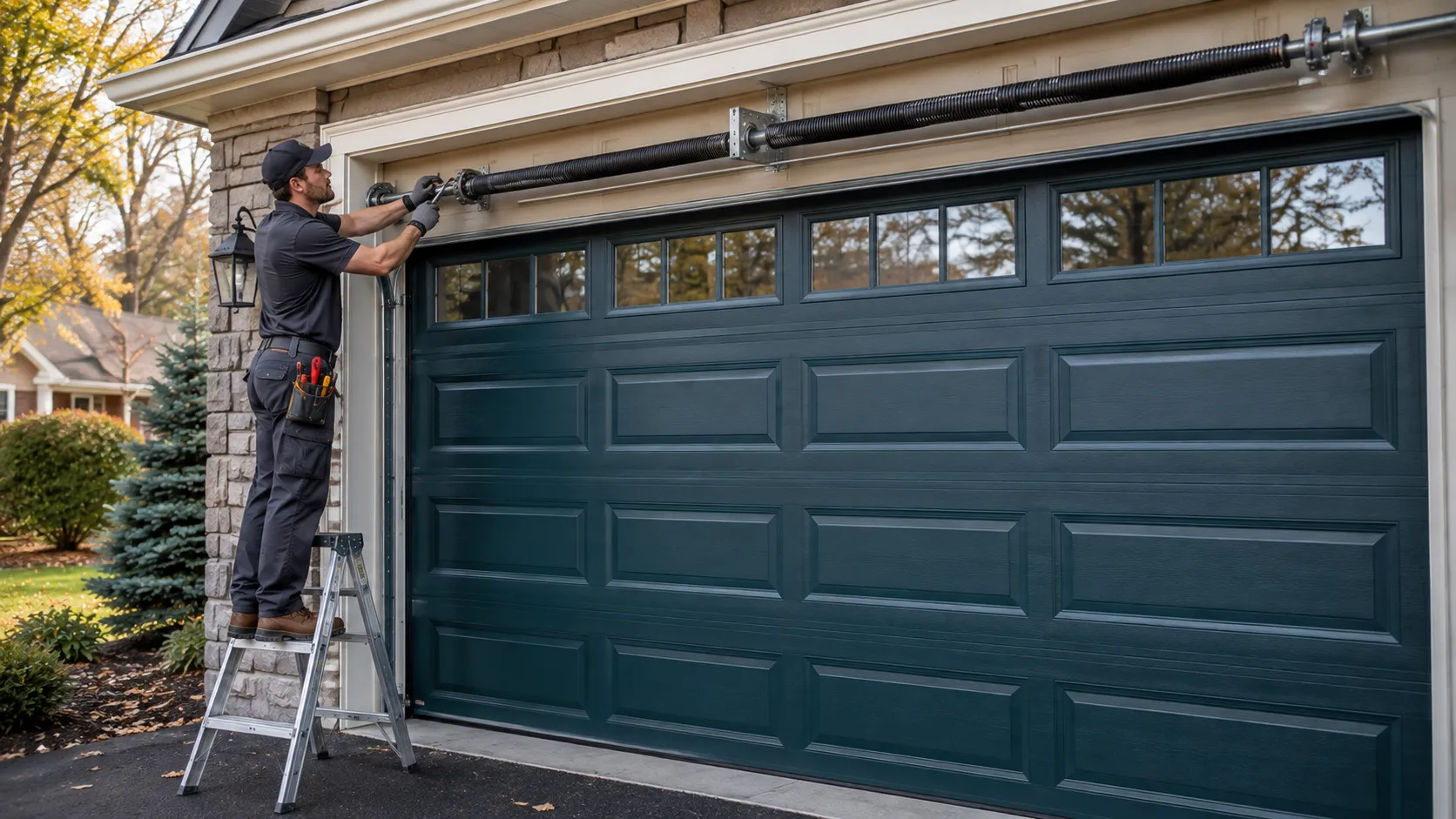
We're 8 miles out of Princeton, so travel isn't the delay - parts availability usually is. Most commercial bays here went up after 2012, which means you're running steel sectional doors on high-cycle spring packages built to a spec that's still current, not the older low-cycle torsion setups we deal with in some of the more established parts of the service area. That's good news on one front: current-spec hardware is easier for us to match off the truck. A straightforward spring or roller swap on that kind of door is usually a same-visit fix once we're on site. Where it stretches out is when a photo-eye bracket or a specific opener control board tied to a newer commercial operator isn't something we carry standard - those can be a next-day parts run. We'll tell you on the phone, before we drive out, which kind of call it looks like.
The Symptom
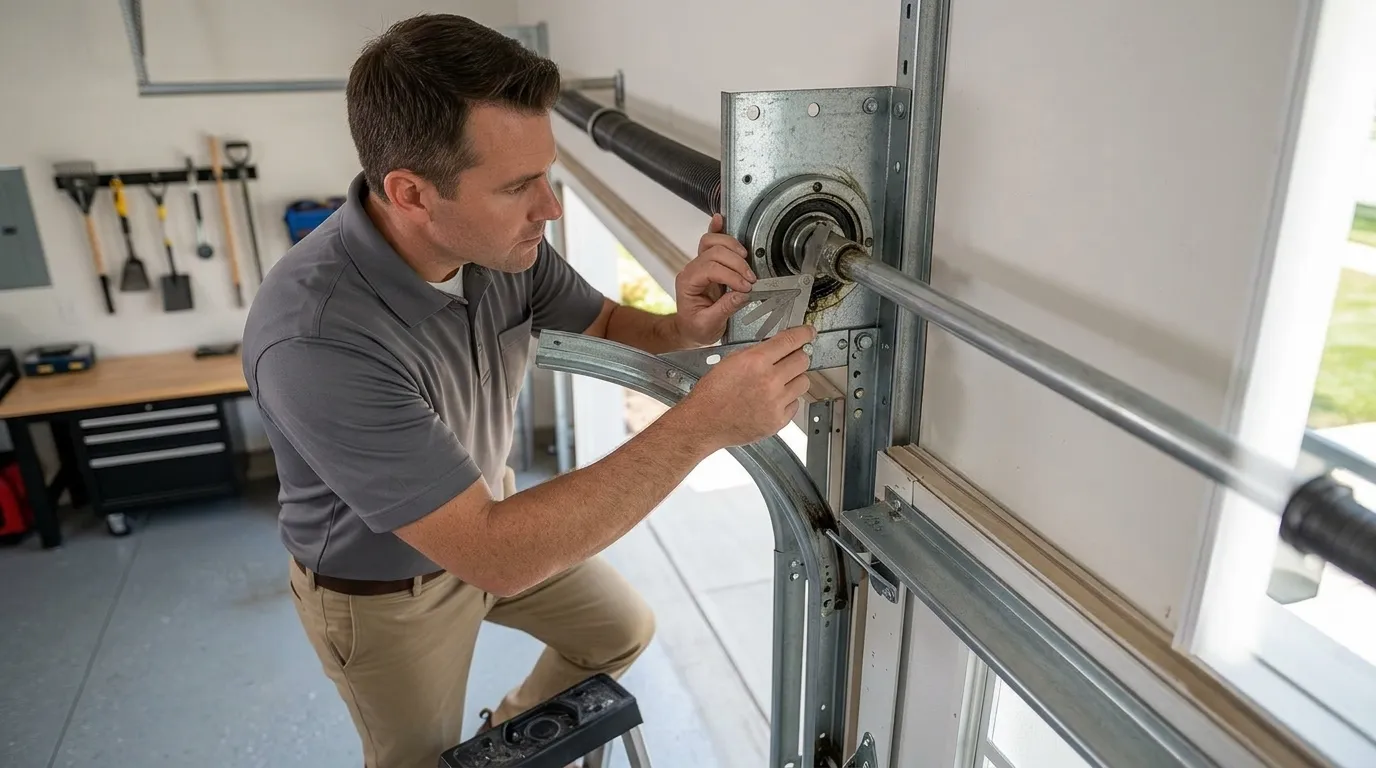
The calls we get out of Princeton skew toward doors that won't close all the way, or that reverse right before they seat - almost always a photo-eye alignment issue on a door under ten years old, not a worn-out spring on a door under twenty. Newer commercial buildings built to current code run photo-eyes and edge sensors as standard, and those sensors get knocked out of alignment by a forklift clipping the bracket, or by a pallet leaned against the track. On older stock elsewhere we'd expect snapped torsion springs first. Here, the door itself is usually fine - it's the safety circuit tripping and refusing to let the door finish its cycle. Second most common: a high-cycle spring that's done its rated number of cycles faster than expected because the bay sees heavier daily traffic than the spring was sized for. Either way, it reads as 'door's broken' to whoever calls it in, when it's often a sensor or a mis-tensioned spring, not a structural failure.
The Cost of This Job
We don't quote commercial pricing sight unseen, since bay size, door weight, and whether it's a sensor fix versus a spring or panel job all move the number. What we can tell you is that Princeton's commercial stock, being mostly newer construction, tends to run standard door widths and spring sizes rather than the odd, discontinued sizes we sometimes hit on older buildings elsewhere in the service area - that keeps parts cost predictable rather than a wildcard. Households in this part of the service area report a median income around $96,766, higher than some neighboring areas we cover, which we mention only because it's relevant to the businesses and property owners we're quoting, not because it changes what we charge. We price the job, not the zip code.
The Complications
The biggest complication on Princeton commercial calls is access - loading dock doors and bay doors built after 2012 are often taller and heavier than the residential doors we service elsewhere, which means two-person jobs more often than one. We also see more electric operators tied into building access systems than we do on older commercial stock, and if that system is part of a larger building automation setup, we're fixing the door and sensor, not troubleshooting the building's access control. If a door's cycle count is genuinely near the end of a high-cycle spring's rated life, replacement of the full spring set is usually the right call over a patch repair - we'll say so rather than sell a temporary fix twice.