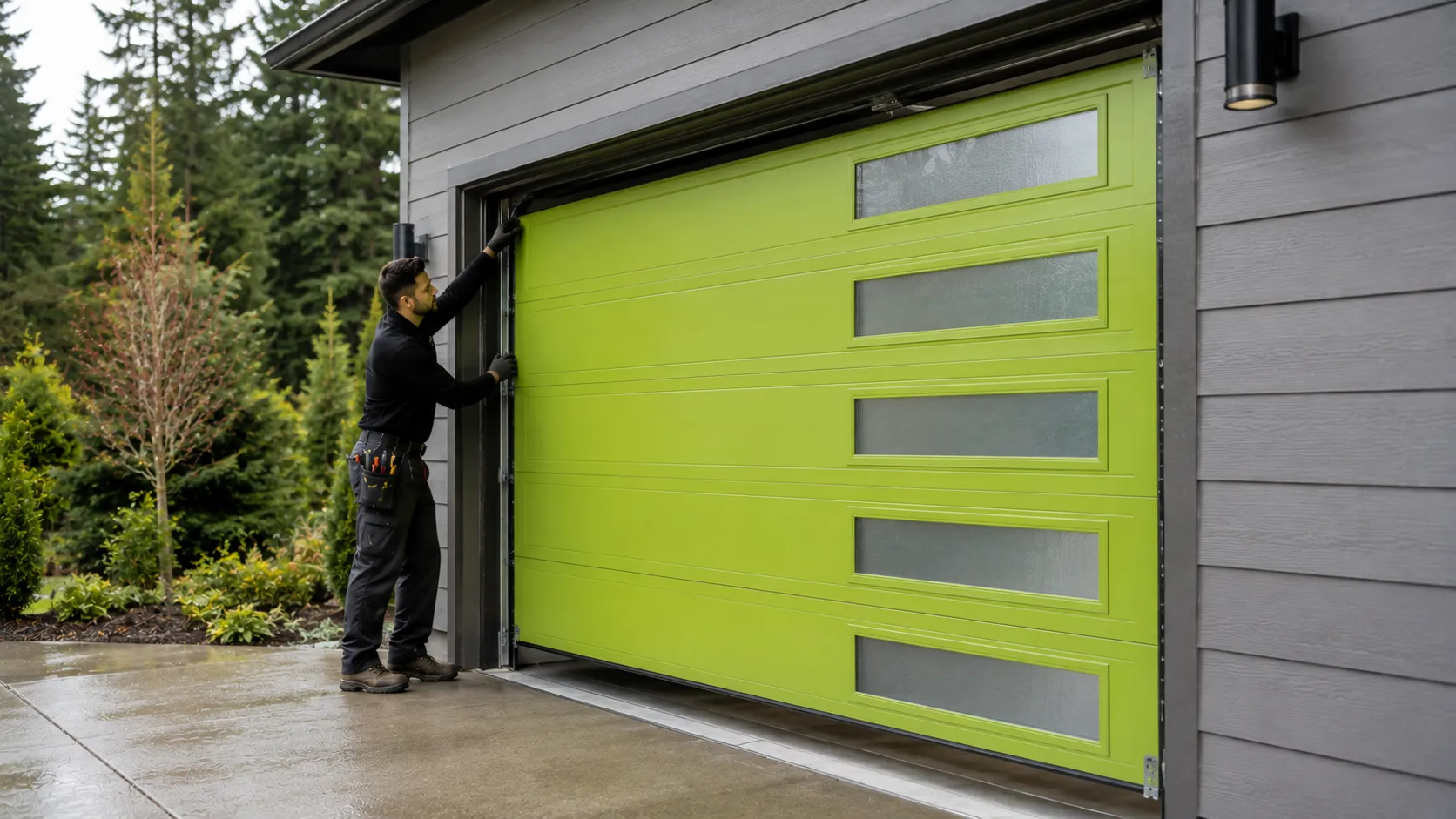
How Long It Takes
Murphy sits about 13 miles from our shop in McKinney, and that distance is part of how we schedule a commercial call here rather than something we gloss over. A single door service visit on a warehouse or retail bay doesn't take long once we're on site, but the drive is real and it's why we ask for a heads-up rather than promising a same-hour arrival we can't back.
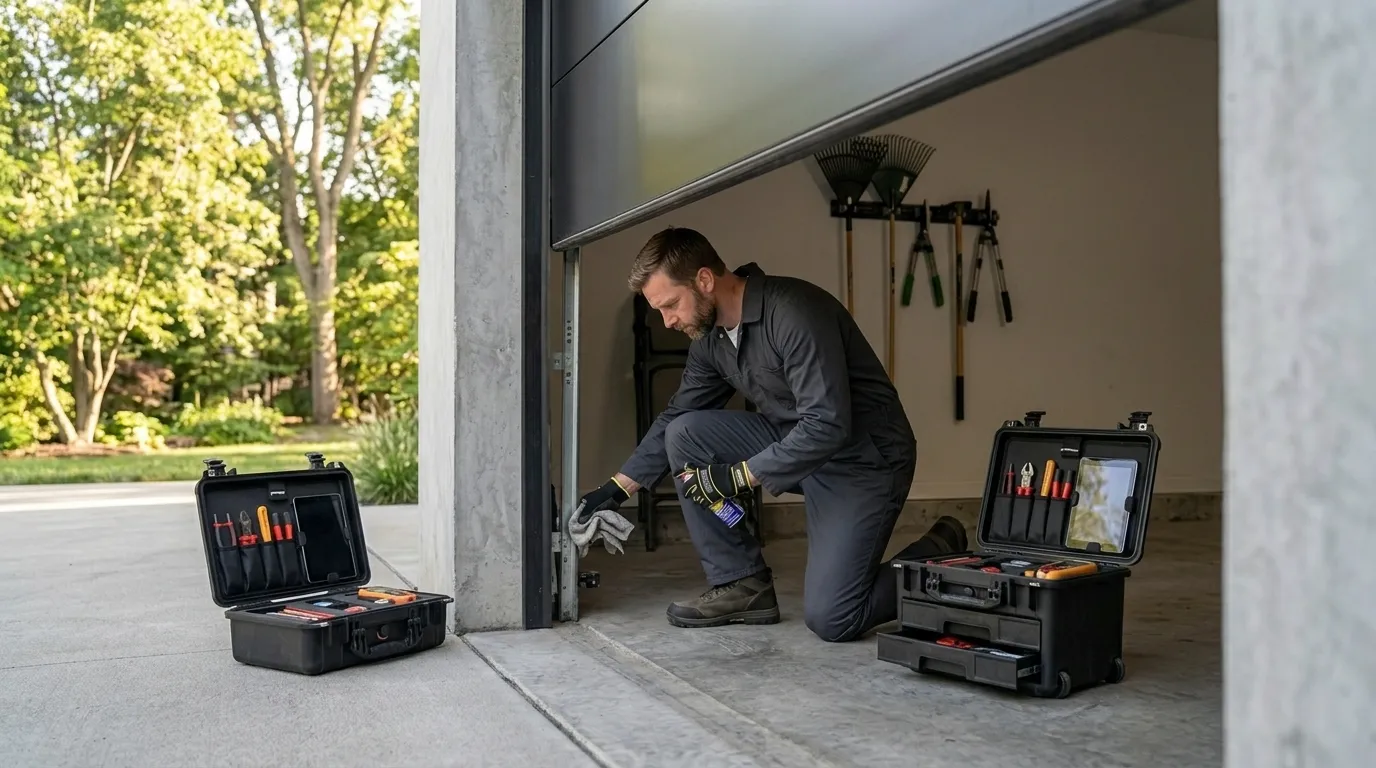
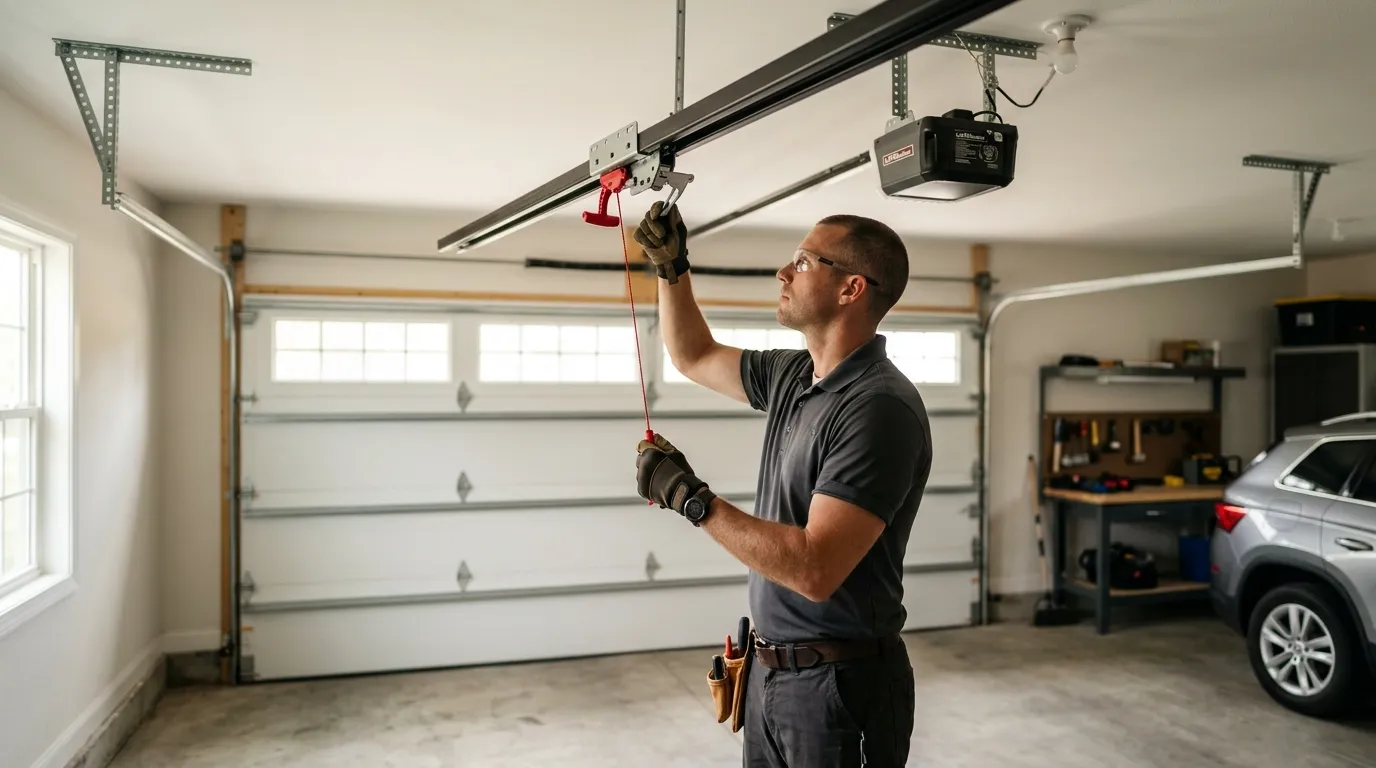
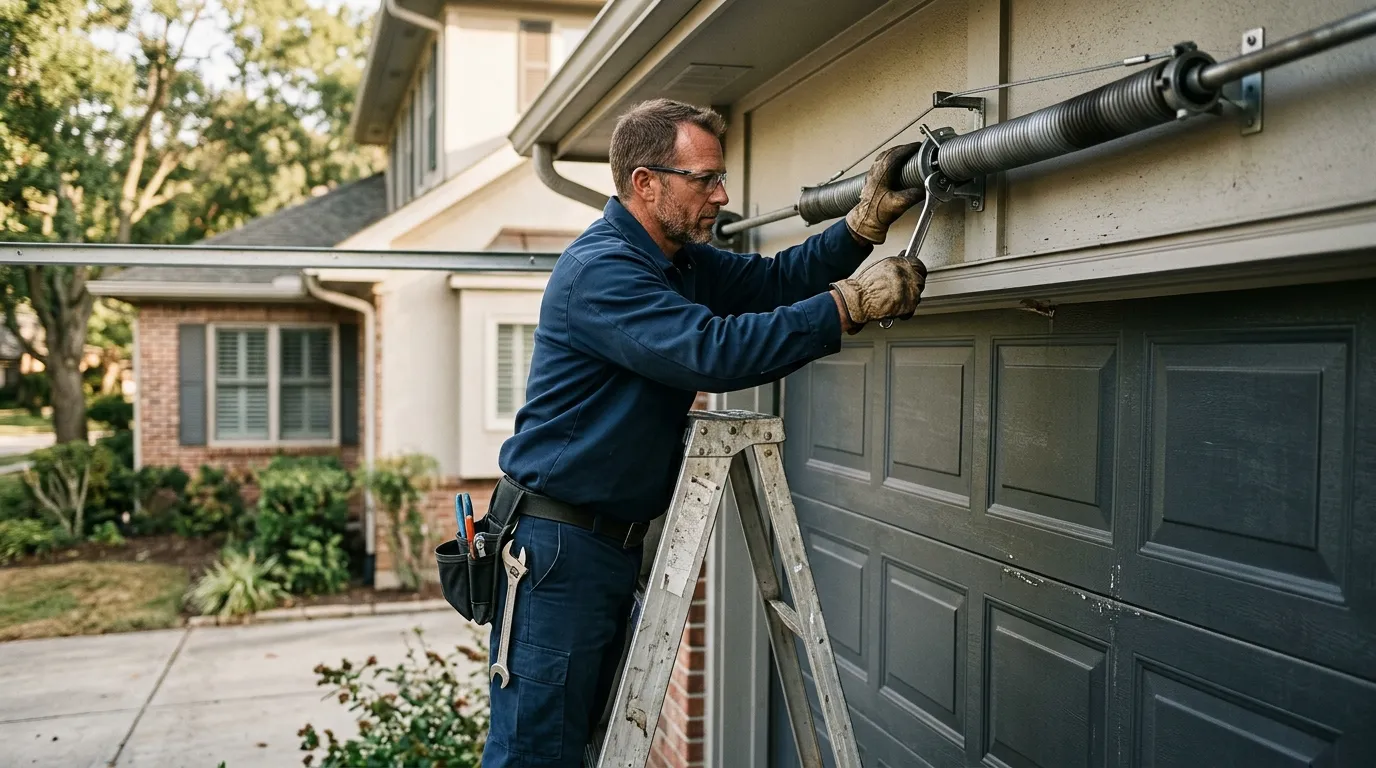
Most of the commercial and light-industrial buildings in this part of the service area went up around 2005, which lines up with the broader pattern across the 19 communities we cover - construction mostly dated 1971 through 2015, with 2005 sitting right at the median. That matters for the job itself: a building from that era almost always has a steel sectional door on torsion springs, a chain or belt-drive commercial opener, and factory photo-eye sensors already wired in. We're not chasing down obsolete extension-spring setups or hand-cranked doors here - the fix is usually a spring, a cable, a bent track section, or an opener board, and those parts are common stock, not special order.
What slows a job down is usually the door size. A single bay takes less time than a three-door loading dock, and if a section needs replacing and isn't in the truck, that's a return trip, not a delay we can shrink by rushing the first one.
What Causes It Around Here
The climate band for this area is classified as moderate heat, not extreme, so we're not dealing with the kind of desert-cycle wear that cooks springs in two years flat. What we do see on commercial doors built in the 2000s is steady thermal cycling - steel panels and tracks expand and contract enough over a Texas summer and winter that track bolts work loose and rollers wear unevenly, especially on doors that open and close dozens of times a day at a loading dock or a service bay.
High cycle count is the bigger factor than age for a lot of these buildings. A door on a retail strip that runs 15-20 times a day puts more wear on a torsion spring in three years than a low-traffic door sees in ten. That's the fault pattern we actually find on Murphy calls: spring fatigue and worn nylon rollers on doors that get used hard, not rust-through or rot, which you'd expect on much older wood-panel stock this area mostly doesn't have.
One honest limitation: if a commercial door here has been neglected for years - bent track, cable frayed past a safe point, opener motor burned out - sometimes replacement is the better call than another patch repair, and we'll say so instead of running up a repair bill on a door that's on its way out anyway.
Booking a Visit
Murphy is one of the closer stops on our route out of McKinney - closer than at 18 miles at 20, and in the same range as Lucas and Princeton at 8 miles. That doesn't change the work, but it does mean scheduling tends to be more flexible here than for the far edges of the service area.
For general residential and commercial door service in this town, see our Murphy page. If you're comparing this to the range of services we run out of the main shop, our McKinney commercial garage door page covers that ground - this page is specifically about the commercial call here, not a repeat of that list.